Support Irish Radio History Archiving

Irish Pirate Radio Recordings

Friday, 9 August 2024

The Centenary of 2BE, Belfast


In 2023 Ireland began a decade of centenaries in Irish radio history. After the 1923 launch of Ireland’s first yet short lived licensed radio station, 2BP, in September 1924 the first permanent radio station of the island of Ireland opened. This is that story…..

2BE, the Launch of Belfast Radio in 1924

“that it will not now be necessary for broadcasting station to arranged in the Free State. There will one in Belfast from which the programmes can heard free any charge. Let us hope the station in question will broadcast some really educational programmes”[1]

These words were the thoughts of a radio listener-in from Belfast in 1924. After the openings of stations on the British mainland, in 1924 it was Belfast’s turn to join the growing list of stations under the control of the British Broadcasting Company[2]. In March 1924, the BBC announced that station call sign 2BE broadcasting on 435m medium wave would take to the airwaves later that year. The BBC were already available in London (2LO), Birmingham (5IT), Bournemouth (5BM), Cardiff (5WA), Manchester (5ZY), Newcastle (5NO), Glasgow (5SC) and Aberdeen (2BD).

The opening of either new regional stations or relay stations for the BBC slowed as the company struggled to find new and clear frequencies. On March 7TH 1924 it was announced by the British Broadcasting Company as it was still known as that the Belfast station had been given ‘official sanction’ and that the wavelength for listeners in Ulster was 435m medium wave. The Belfast Telegraph reported,

‘The power the station will kilowatts and a wave-length metre of 435 will be used. The call sign will be 2BE. A site has yet been found for the station, but the company hopes that it will be opened from two to three months’ time.’

By the end of March, Harold Bishop[3] the assistant chief engineer arrived in Belfast to lay the groundwork for the new station.


The studios and offices of 2BE, were to be located at 31 Linenhall Street, a central position in the city, while the aerial and transmitting plant to be erected at the Corporation Electricity Station at the East Bridge Street. The aerial was of the" sausage " type, and the ends were supported by the two tall smoke-stacks of the generating station, the halyards already being in position.


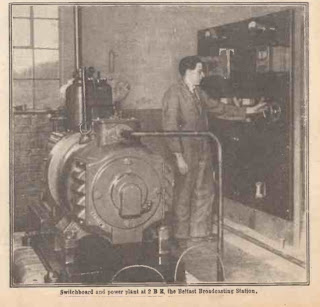
In 1919, 31 Linenhall Street was sold by Linen company of Daniel Currell and Sons. 


It was purchased by British Thomson Houston Limited a manufacturer of wireless valves. The company also had offices as Suffolk Street in Dublin. It would be their upper floors that would be used as the studios and offices for 2BE.


According to T.P. Allen in Popular Wireless Weekly

“The space now occupied by the offices and studio was originally one large flat, and this had to be divided off into the various rooms necessary for the staff. The studio itself is approached through a winding corridor, which divides the various offices, all of which are situated on the second floor and above the B.T.H. Company's Belfast premises. The corridors are liberally placarded with requests for silence, and a waiting -room is provided for artistes; those wishing to listen -in while waiting their turn may do so. The studio is treated in the same way as those " across the Channel," and is draped and carpeted, and has a canopy of light fabric, all with the idea of reducing echo. As a matter of fact, the draping was not finished when the station commenced its present experimental transmissions.”


In advance of the station opening Walter Montagu Douglas Scott was appointed as the Station Director. He was the cousin the Duke of Buccleuch, educated at Eton University, and described as widely travelled as both a traveller and a diplomat. An accomplished linguist, he was also keenly interested in musical and dramatic art and declared upon his appointment that he hoped to make making the Belfast station one of the most successful in the BBC system. Scottish born Edmund Thompson was appointed as his assistant. He had been educated at Edinburgh University. A Territorial officer, at the age of 21 was promoted to Major, He was in charge of a siege battery in France during the First World War and was awarded the Military Cross in 1919. Local man Godfrey Brown was appointed the musical director with his assistant named as Thomas Corrin.

After a week of nightly tests for one hour, on Monday September 15th, 2BE went on the air. The first voice to be heard on the airwaves was that of twenty four year old William Tyrone Guthrie. Guthrie was born in 1900 at Tunbridge Wells, Kent in England. He had just joined the BBC and his later career would be producing plays for radio and as a theatrical director. His second cousin was the Hollywood actor Tyrone Power.


The introduction of ‘Hello Hello this is 2BE, the Belfast station of the British Broadcasting Company’ got programming under way at seven o’clock. The Orchestra then played the National Anthem but shortly after the airwaves fell silent as a technical hitch put 2BE off the air for thirty minutes. The reaction to the first night was mixed. Former Director General of the BBC Tony Hall recounted on the nineth anniversary of the opening of 2BE that one writer to the newspaper in Belfast said that,

“I see from the papers that there is a large increase in the sales of radio sets. After last night’s programme I am selling my set too.”

The station’s director Douglas Scott spoke to his audience just before the close down,

“Belfast calling. Thanks to the efficiency and energy of our engineering staff, the Belfast Broadcasting station is established and should have commenced working at 7 this evening but owing to a technical fault we were delayed until 7.30. The official opening of this station by his Grace the Governor of Northern Ireland will take place in October upon a date which will be published later.

Our future endeavours will be to offer all our listeners an attractive programme. In all the British broadcasting stations there is a common keenness to offer the best. The wavelength to this station has been fixed in conjunction with the Northern Government authorities, also having regard to the wave-lengths of our existing stations. We trust that everybody will be satisfied and that this opportunity to claim indulgence for any sins of omission or commission and we also wish to express our hope that those listening at Bellevue this evening will have enjoyed the programme’.

This is the Radio Times listing of the first week of 2BE.


The BBC’s assistant controller for Scotland Millar Craig and the BBC’s chief Engineer Peter Eckersley were both in studio for the first night’s broadcast. The Freeman’s Journal reported listening-in to the first night’s broadcast but started their article with less enthusiasm than listeners north of the border.

“The first words spoken from the new broadcasting station in Belfast last night reached Dublin in a very English accent. It was the precise, careful modulation of Southern standard English, made familiar to listeners in this country by the official announcers from the English stations. I had just been listening through Glasgow to the sturdy accent of the Clyde and had expected from Belfast the accent of the Lagan, which, despite all our differences would have been more welcome than the intonation of the foreigner.

But just at present Belfast is more English, than the English themselves, and perhaps the choice of an announcer was motived by that consideration. Another straw showing the present direction of the Belfast wind was the fact that while the British, stations are content to finish their programmes with God Save the King, Belfast began its first programme with what most of its inhabitant’s regard as that good party tune.”

Not everything went smoothly in that first week, the Irish Sunday Independent on Sunday 21st reported, Edward Dillon wrote,

“I tuned in the other night to the transmission from the newly completed Belfast station. Sure enough, shortly after seven 2BE came through with almost startling clearness and called, though with a very English accent, "Hello, everybody Belfast calling! This is the Belfast station of the British Broadcasting Company”, who are opening one station a month and then " Silence . . . And more silence. Had the station been blown up? Had the chief engineer started to discuss the Boundary Question with the Director of Programmes, with unhappy results to the microphone? Anyway, tune as we might not a sound from 2BE could we pick up after.”
After a month on the air, the station was officially launched on Friday October 24th at a major event and outside broadcast from the Ulster Hall. Hundreds gathered in the hall, while thousands listened across Ulster and many more turned in as the opening was simultaneously broadcast across the BBC network. 


The band of the Seaforth Highlanders provided the music including the playing of the national anthem that announced the arrival of the Governor of Northern Ireland, The Duke of Abercorn[4]. Apart from the Duke’s speech, there were also speeches delivered by Lord Gainford, chairman of the BBC, Sir James Craig, the Northern Ireland Prime Minister, Sir William Turner, the Belfast Lord Mayor who acted as MC for the event and Dr. Livingstone, Vice Chancellor of Queens University. Also in attendance was John Reith the chairman of the British Broadcasting Company. 

Each of the speeches were received with sustained applause but the biggest cheer and roar was reserved for the end of the night when the news bulletin was relayed from London stating that the then self-styled President of the Irish Republic and commander of the losing side in the Irish Civil War, Eamon DeValera, had been arrested in Newry.

At the end of the gala evening it was Antrim born Archibald McKinstry, a director at the British Broadcasting Company through his role at Metropolitan Vickers, that motioned a vote of thanks to the Governor and his wife Lady Abercorn.

In his speech Craig humorously intimated that the reason that the station was known as 2BE was that the station was in the Second city of the British Empire. This was a titled often spoken of as Dublin prior to the War of Independence.

In March 1935 the station was renamed as the Northern Ireland Regional Service. After the Second World War it was renamed the Northern Ireland Home Service and today 2BE is known as BBC Radio Ulster.


[1] Radio Notes Belfast Newsletter July 1st 1924

[2] It did not become the British Broadcasting Corporation until 1927

[3] 1900 – 1983, Bishop was awarded a CBE for his services to broadcasting

[4] James Albert Edward Hamilton, 3rd Duke of Abercorn (30th November 1869 – 12th September 1953

Sources
World Radio History
Irish Newspaper Archives
British Newspaper Archives
BBC Archives
BBC NI
RTE
National Archives UK
Wireless World


Sunday, 4 August 2024

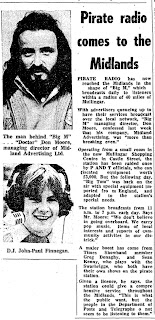
Big M 1978, Mullingar's First Pirate Radio Station

Big M, Mullingar, Co. Westmeath 217m MW 1978-1979


Don Moore at the launch of Big M 1978 (c) Don Moore


In early 1978 it was announced that RTE’s mobile radio service would visit Mullingar. A committee was formed to produce and present the programming content while RTE would provide the mobile van and transmitter. There was great excitement in the County Westmeath town and RTE’s arrival would spark a desire to have their own voice.

On Wednesday October 11th Community Radio Mullingar went on the air for the following six days. From the Thursday the station could be found twice a day 11.30 – 1.30 and 4.30 – 6.30 broadcasting on 202m medium wave to a five mile radius. On October 15th, the RTE van left town.

On November 16th in the local Westmeath Topic newspaper in an article on page 14, headlined ‘Praise for Community Radio’ it reported that at a meeting in the Greville Arms Hotel, the District Chamber of Commerce congratulated all those involved in the community radio project.


Interestingly on the front page of the same newspaper was the headline ‘The Pirates Are Coming’.


While RTE were broadcasting in July another committee were in talks with Don Moore, better known as ‘Doctor Don’ who was operating the pirate station Alternative Radio Dublin in the capital. With the backing of local businessmen including those in the then popular showband scene including Sean Kenny, a guitarist with the Swarbriggs, Benny Whyte a showband leader and showband promoter and politician Senator Donnie Cassidy, a pirate radio operation was being set up just as the RTE van pulled out of town. Don procured a medium wave transmitter to broadcast on the nearby frequency to RTE’s 202m, 217m medium wave. A studio was readied in Castle Street above a man’s shop. After a couple of weeks test transmissions, the station, to be known as Big M, was officially launched at 11am on November 23rd 1978. On that first broadcast, the station dropped a microphone out the window on a long lead, so that locals on the street could be interviewed. The station unusually for that time in pirate radio had its own phone line on 80923.


Fellow DJ’s from ARD arrived with Don including his wife Debbie, Dave Cunningham (known on air as Dave C) and DJ Sylvie. Locals DJ’s included John Paul Finnegan, Paul Mitchell and Alan Nolan.

Just after 12.30pm on Tuesday December 12th while Debbie Moore was on the air, the station was raided by officials from the Department of Post and Telegraphs backed up by local Gardai raided and closed the station. They confiscated the studio equipment and more importantly the transmitter. Don travelled from Dublin that night with a replacement transmitter and by noon the following day Big M was back on the air in time for the lucrative Christmas advertising market.

On Monday March 5th at 10am, Castlepollard native and DJ Alan Nolan, began a charity 25 hour charity on air marathon raising over £1,000 for the local Cystic Fibrosis association. 


With many of the ARD based DJ’s, including Moore, returning to Dublin, Big M closed at the end of March 1979. A couple of years later a bigger and more successful pirate station would open in Mullingar under the stewardship of Sean Coyne, Radio West. West would remain on the air until the introduction of the new Wireless Telegraphy Act in 1988. 


 Sources

The Irish Pirate Radio Archive

The Irish Newspaper Archives

The Westmeath Topic

Don Moore (RIP)

Debbie Moore

The RTE Archives

Wednesday, 26 June 2024

Moate Community Radio, Local Pirate Radio in 1980s Ireland

As I research the use of community radio in Ireland in the 1980s for a new book, I discovered the stories of a number of the smaller pirate radio stations including Midleton Community Radio (their story in our next post) and this station Moate Community Radio in County Westmeath. 


The community in Moate approached RTE to bring their mobile radio station to the town but RTE were unable to accede to the request. As a result a FM transmitter was sourced and with studios located in the Carmelite College in the town, Moate Community Radio first came on the air after a couple of days testing on Saturday July 31st 1982 broadcasting on 104mhz FM. The station stayed on the air for just one week but it was well supported with advertising from the local business community. 


The station came back on the air in 1983 once again for a week, but by 1984 the station was not only broadcasting on FM, now 101mhz, but also on medium wave 210m. By now Aidan Higgins was acting as the station manager. 


The final outing for Moate Community Radio was in 1985 with the 210m transmitter once again on the air but the FM was now located on 103.5mhz. Their studios had moved from the College to a premises on the main street on the town.


Sources
Westmeath Independent
Westmeath Topic
The Irish Pirate Radio Archive

If you are affected by any issues raised here some of the helplines include
The Rape Crisis Centre 1-800-778-888
Pieta House 1-800-247-247


Thursday, 28 March 2024

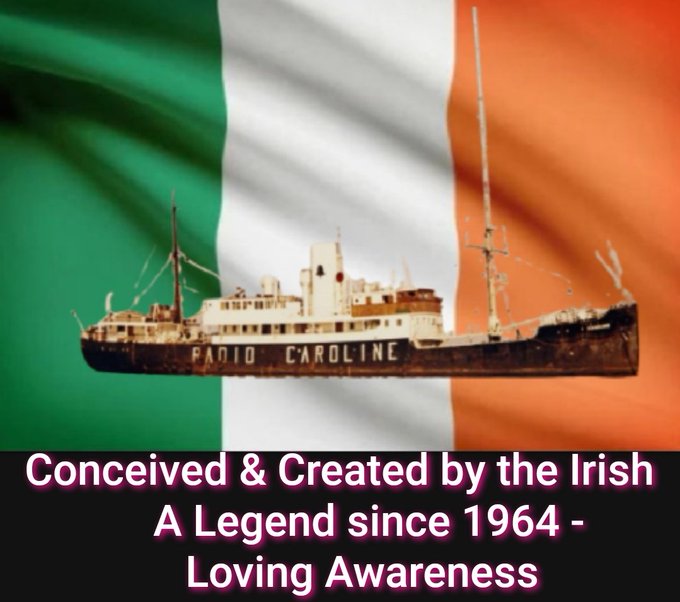
Raidio Carúilín - The Irishness of Radio Caroline including the Judge, the Port, the Owner and a Rebel


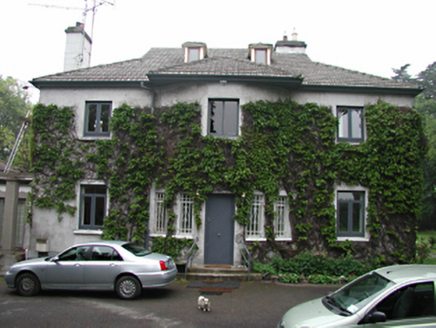
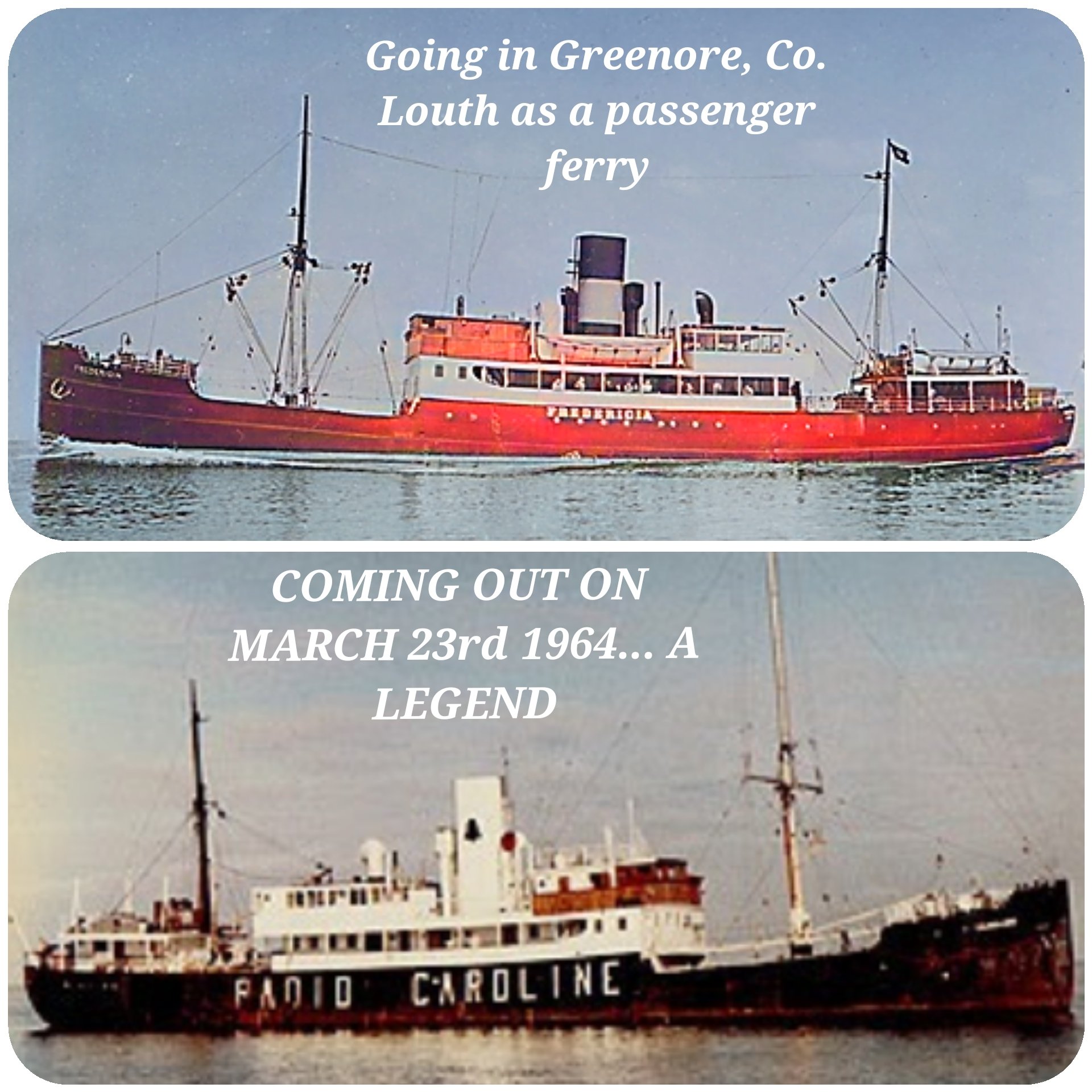
Sixty years ago, a Clondalkin born Dubliner, Ronan O’Rahilly became a legend and began a revolution of the airwaves. Ronan, who passed away in 2020 was the grandson of ‘The O’Rahilly’ who died during the 1916 Rising. On Easter Sunday March 29th 1964, broadcasting from a converted passenger ferry, the MV Fredericia, off the coast off Essex, Radio Caroline began regular transmissions. It would cause a tsunami of change in the broadcasting and music worlds. There was a large Irish dimension to the station because not only was its founder born in Dublin but the ferry was converted into the iconic radio station at the County Louth port of Greenore, owned by Ronan’s father Aodoghan.


Moreen House in Clondalkin where Ronan was born

In July 1964, when Caroline merged with another offshore pirate ship Radio Atlanta, the original MV Caroline was moved from its moorings off the east coast of England to a new location off Ramsey in the Isle of Man and was renamed as Radio Caroline North. It became an instant hit across Ireland broadcasting initially on 199m and later 259m medium wave. Noel, a brother of Eamonn Andrews, who famously presented What’s My Line and This is Your Life on TV, had been working as a sports reporter for Radio Eireann. He found himself broadcasting his first music show ‘The Andrews Live’ on Radio Caroline on Tuesday December 1st 1964 as Caroline was now averaging a listenership in the British Isles of 28 million every day. The first track he played was from fellow Irishmen ‘The Batc    helors’ who were now heading for stardom in Britain and managed by major Caroline investor Belfast born Phil Solomon. Noel proved to be a popular broadcaster with the housewives. He had previously been on Radio Eireann presenting the ‘Housewives Choice’ programme. When he returned to Radio Eireann from Radio Caroline, he was briefly relegated to presenting Children’s programmes.

 (Hear Noel Andrews on Caroline HERE courtesy of offshoreradio.co.uk)

When Caroline arrived off the Manx coast, their transmissions were heard across Ireland and with it an opportunity to grab some of the lucrative advertising pie. With this in mind, Jim Craig was appointed Caroline’s representative in Ireland and they opened offices in August 1964 at 27 Molesworth Street, dubbed Caroline House. Today that building is incorporated into Buswells Hotel, directly across the road from Leinster House. 

The holding company for Caroline was known as Planet Productions Limited with a subsidiary Planet Productions Eire Limited looking after the advertising for the stations. On August 1st 1964 in advance of the introduction of new UK laws, two directors of the Irish company, London based Richard Trapnell and Dublin born Herman Good resigned. According to the Pirate Radio Hall of Fame,

His friend Christopher Moore, a club DJ, provided the musical knowledge and having served in the Merchant Navy, some nautical experience too. Moore introduced O'Rahilly to a friend of his, Ian Ross. They met one lunchtime around Easter 1963. O'Rahilly told Ross of his plans. Ross was impressed by the project and thought that his father might be interested in investing. Mr Ross Senior worked in the city and was an expert in raising venture capital. That afternoon they squashed themselves into Ian Ross's MG sports car and set off to the family home in Haslemere, Surrey. By that evening the deal had been done. His father put in some of his own cash, as did his friend John Sheffield, chairman of the Norcros Group of companies. Together they and their firms put up over 80% of the launch capital - some £250,000 in all. Other investors included Sheffield's son-in-law Jocelyn Stevens, then proprietor of Queen magazine, and Dublin lawyer Herman Good. They all recognised the plan had potential.’

American born Chris Moore helped Ronan source the MV Frederica and when the ship had been converted into Radio Caroline, he was the first voice heard on Easter Saturday 1964, playing the very first record The Rolling Stones’s ‘Not Fade Away’.

The news of the resignations were reported in the Evening Herald on September 20th 1964,

The resignations of District Justice Herman Good, chairman and director, and Mr. R. L. Trapnell (London), director, Planet Productions Ltd., selling agents for Radio Caroline became effective as from August 1st it was announced at a meeting of the board of directors.


The interesting fact here is that Mr. Good, a solicitor, had been appointed as a temporary District Court Judge earlier that year in February 1964. His position as judge was confirmed in May 1968 when he was officially sworn in by the future President of Ireland Cearbhaill O’Dalaigh and would have been a serving judge when MV Caroline was being fitted out in Greenore and when he was director of Radio Caroline. It was nor Justice Good’s first brush with pirate radio. Following a raid by the Gardai on Radio Romeo illegal broadcasting from Clontarf in July 1965, in January 1966 father and son Thomas and Michael Rogers and Brian Clancy were charged with illegal broadcasting. They were defended by their solicitor Herman Good, he told the court,

‘This is not a second Radio Caroline’.

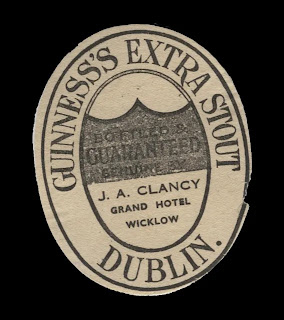
The father was fined one pound while the teenagers including his son were fined one shilling each. Brian Clancy gave his address as the Grand Hotel, Wicklow which was owned by his family.

Herman Good was born Herman Good Gudansky in June 1906 in Dublin. In 1933 he married Belfast born Sybil Wine and they lived on Merton Road in Rathmines. Justice Good would pass away in November 1981.


The station also pandered to its blossoming Irish audience by broadcasting Ireland’s Top 30 Chart Show compiled by the New Spotlight magazine from April 1967. The top two that first week were Sandie Shaw’s ‘Puppet on a String’ at number one and Sean Dunphy’s Eurovision entry ‘If I Could Choose’ at number two. For The Dubliners and Caroline "plugging" promoted success in the entertainment world. According to Luke Kelly, plugging made them one of the first groups based in Ireland to sell their music to the British public. Four years earlier they were just nonentity’s, folk-singing around the public houses of Dublin. Then with the assistance of Solomon, they could command fees of up to £6OO per night, performing all over the UK, including London's Albert Hall. The station created the Caroline Showband and in 1965 was instrumental in getting Longford born Larry Cunningham to become the first Irish artiste to enter the British charts and a subsequent appearance on BBC’s Top of the Pops. When the American singer Jim Reeves, who Cunningham had supported on tour in Ireland, was tragically killed in a plane crash, Sligo based solicitor Eddie Masterson wrote ‘A Tribute to Jim Reeves’ which Larry recorded on King Records with his showband the Mighty Avons. One of the Mighty Avon musicians was Jimmy Smith who would set up the very successful Dublin based country and western pirate radio station TTTR in the 1980’s.


On August 14th 1967, the British Government introduced the new Marine Offences Act to curtail the success of the offshore pirates. The radio ships and forts could no longer be supplied from the British Mainland and advertising revenue was restricted. This immediately affected Caroline South who renamed themselves as Radio Caroline International but North continued as normal as the Isle of Man Government held out against their Westminster masters until September 1st to ratify the new law, described in the Manx Parliament as Black Friday.

With the British mainland and now the Isle of Man cut from resupplying Caroline North, the Drogheda Argus reported on September 15th,

‘Another chapter in the Marine Broadcasting controversy began last Thursday afternoon, when a 40-ton Dutch tender entered Dundalk quays. Twenty four hours later, the tender, Offshore III, left the wharf laden with groceries for Radio Caroline. The supplies consisted of breed, milk, meat and vegetables, and were purchased in a Dundalk store. Fresh water was also put on board. It is generally assumed that these supplies are for the crew and personnel of the "sound of the notion" Radio Caroline North.’


In February 1968, the Dundalk port authority’s annual returns shows that in 1967, the port had 268 movements in and out, 21 of these in four months were made by Radio Caroline’s supply boat, making up 8% of the movements. The 40 ton tender Offshore III was owned by the Wijsmuller Brothers in Holland and arrived in to Dundalk to collect, fuel, water and food for the crew and equipment. Three tenders were operated out of Holland by the Wijsmuller brothers. 'Offshore I' and 'Offshore II' supplied the ship on the east coast of England while the larger 'Offshore III' supplied Caroline North. Prior to the new Marine Offences Act the Offshore III would load in Douglas or Dublin to resupply Caroline.


According to the Pirate Radio Hall of Fame,

‘Although the two Caroline ships were continuing to broadcast, behind the scenes, it was a tough time. The isolated DJs had to endure long stints at sea and dreadful tender journeys when they did finally get some leave. And, for the bosses, the financial situation was proving difficult. With the ships being supplied and crewed from Holland, the station's money problems were exacerbated when the UK devalued the pound in November 1967. With only a limited income, bills weren't paid on time and, as the months passed, a substantial debt built up with the Wijsmuller tug and salvage company. This firm was responsible for crewing and servicing the two radio ships and, as the money owed reached £70,000, one of the Wijsmuller brothers decided that enough was enough. In an effort to get his money, he ordered his men to impound the two Caroline vessels. On March 2nd 1968 Caroline North's programming finished, as usual on a Saturday, with the late ‘Daffy’ Don Allen’s ‘Country & Western Jamboree’. Canadian born Don would be found later broadcasting on numerous Irish pirate radio stations including Radio West in Mullingar and even had a show on RTE FM3, the forerunner of Lyric FM. Soon after the station closed for the night the ship was boarded by men working for Wijsmuller. Caroline North never returned to the air, the ship was towed by the Wijsmuller tug Utrecht.


In November 1968 before the High Court in Dublin a winding up order was placed before Mr. Justice Kenny to wind up Planet Productions Limited moving all Caroline’s operations abroad.


Caroline still broadcasts from the Ross Revenge ship off the East coast of England but is now licensed but the music style and ethos is still the same and can be heard clearly at night in Ireland on 648khz.


Radio Caroline revolutionized radio for a generation, shining a light on a dark world. It led to the creation of BBC Radio 1 to compete for the ever-growing audience of young listeners. It provided an outlet for new music and it gave enjoyment to millions. There’s a reverence for what Caroline was. It was a rebel, it was an influencer, it was a genuine attempt to provide the listening public with what they wanted to hear.


In Ireland, Caroline opened up the possibility of an alternative to State media, and while we never had a pirate radio ship broadcasting into the country, Caroline’s success created a community of pirate radio pioneers across Ireland (some using the Caroline moniker in homage) and this pirate radio tidal wave eventually in the seventies and eighties, created the radio industry that broadcasts today.

Sources

The Pirate Radio Hall of Fame

DX Archive

World Radio History

The 1965 Radio Caroline Annual

The Irish Newspaper Archives

The British Newspaper Archives

National Inventory of Architectural Heritage Ireland

The Irish National Archives

Offshore Radio

Paul Rusling

Ancestry.com


Friday, 22 March 2024

When Listening to Radio Caroline Brought You To An Irish Court


When Mrs. Kathleen Durnin from Dunleer in County Louth tuned into the offshore pirate radio station Radio Caroline in February 1965 little did she know she would appear in an Irish court just weeks later, and she wouldn’t be the only one. When the MV Caroline travelled from the North Sea to a new anchorage off Ramsey in the Isle of Man, Radio Caroline’s popularity across Ireland soared to new heights.


As she listened, she heard the ‘Ognib Show’ hosted by the comic actor Charlie Drake. ‘Ognib’ was the reversal of the word Bingo. Bingo via the radio became a new and popular phenomenon and Irish listeners like Mrs. Durnin were hooked.


One of the most popular radio bingo programmes, also heard loud and clear in Ireland was Radio Luxembourg’s, ‘Postal Bingo Show’ that was linked to the Durham Postal Bingo operated by Derek Killingsworth Armstrong. The Bingo had at its height in early 1965, 100,000 people playing every week, posting in a postal order for 3/6 to participate.


Irish fans of Radio Luxembourg’s show included Katherine Hickey from Waterford, James Byrne in Camolin, Patrick Corless in Clare, Maura Delaney in Ardee and Robert Thornton in County Leitrim. But despite the popularity of Radio Caroline and Luxembourg, troubled waters lay ahead for the Irish listeners.


In March 1964, James Byrne posted an envelope to Durham containing a 3/6 postal order to take part in the airwaves game but his letter was intercepted by the Irish postal authorities in Dublin Castle, opened and he then received the dreaded knock to his front door. The Gardai were there. He failed to realize that under Section 34 of the Gaming and Lotteries Act 1956, ‘It is illegal to send money to a lottery outside the jurisdiction’.


The visit of the Garda meant a trip to court where the Judge took into account that he did not know it was illegal to send money abroad to participate in lotteries such as ‘Bingo’. Byrne was given the probation act but in a strange piece of Irish legislation, the State were not allowed to hold onto the evidence and the postal order was retuned to Mr. Byrne. In April 1964 Patrick Corless from Ruan, Co. Clare another listener to Radio Luxembourg told the court that he could win up to £ 8,500 on a full house. There were postal bingo games in Ireland but the prize fund was little more than a couple of hundred pounds and not the thousands that could be won on radio bingo. Patrick Corless too ended up in court in Ennis and was handed the Probation Act.


In August 1964 Katherine Hickey from Waterford had her 3/6 postal order intercepted by the Post Office which was being sent to Durham Postal Bingo Listening to Radio Luxembourg. In Court the judge gave her the Probation Act at Dungarvan Court and sentenced to listen to Radio Eireann. Maura Delaney from Ardee was the recipient of the Probation Act from Justice Rochford in December 1964


On February 20th 1965, Mrs Kathleen Durnin from Dunleer who had also been caught posting a 3/6 postal order to Durham Postal Bingo told the court that,

‘It was the result of listening to a commercial on Radio Caroline’

She too had the Probation Act applied and had her postal order returned

It was not just the East coast listeners that were listening and attempting to participate, in April 1965 Robert Thornton from Dromod appeared at Rooskey Court before Mr Justice PJ Loftus. Once again, the probation act was applied and his two Postal orders returned.


But it was not just in the Irish courts that radio bingo games were about to suffer setbacks. In June 1965 the British House of Lords ruled that under the 1934 Betting Act, the Durham Postal Bingo contravened that act. According to the University of Kent’s Bingo Report the House of Lords,

Upheld the conviction of the proprietor of a postal bingo club for running an illegal lottery, on the grounds that buying a ticket in this form of bingo was not participation in a game. The postal bingo involved 300,000 players. Results were announced in a dedicated bingo programme on the pirate radio station Radio Luxembourg and published in the cult magazine Tit Bits. Again winners were contacted and notified without having to claim; again the court held that there was no gaming, since there was no participation in a game and no assembly of players.’


Despite that setback and the disappearance from Luxembourg’s schedule offshore pirate Radio Scotland revived the game with significantly lower prize money.


Sources
Offshore Echos Magazine
DX Archive
The University of Kent
The Irish Newspaper Archives
The British Newspaper Archives
Hansard, The House of Lords
The National Archives of Ireland
Radio Luxembourg 208 Archives
(c) The Irish Pirate Radio Archive