Support Irish Radio History Archiving

Irish Pirate Radio Recordings

Showing posts with label Irish Army. Show all posts

Tuesday, 31 August 2021

Radio Dublin in the Lebanese Battlegrounds of 1980


The DX Archive

There are many colourful stories from the golden era of Irish pirate radio but one of the most remarkable stories was how two young female pirate DJ’s from Radio Dublin found themselves in the midst of a war in the Middle East along with Phil Coulter’s wife. In 1978, the Irish Government agreed to allow the Irish defense forces to be part of a peacekeeping force in the Lebanon created by the United Nations, known as UNIFIL[1]. In 1979 illegal pirate radio station Radio Dublin was expanding its schedule and one programme developed that would challenge the state broadcaster RTE.


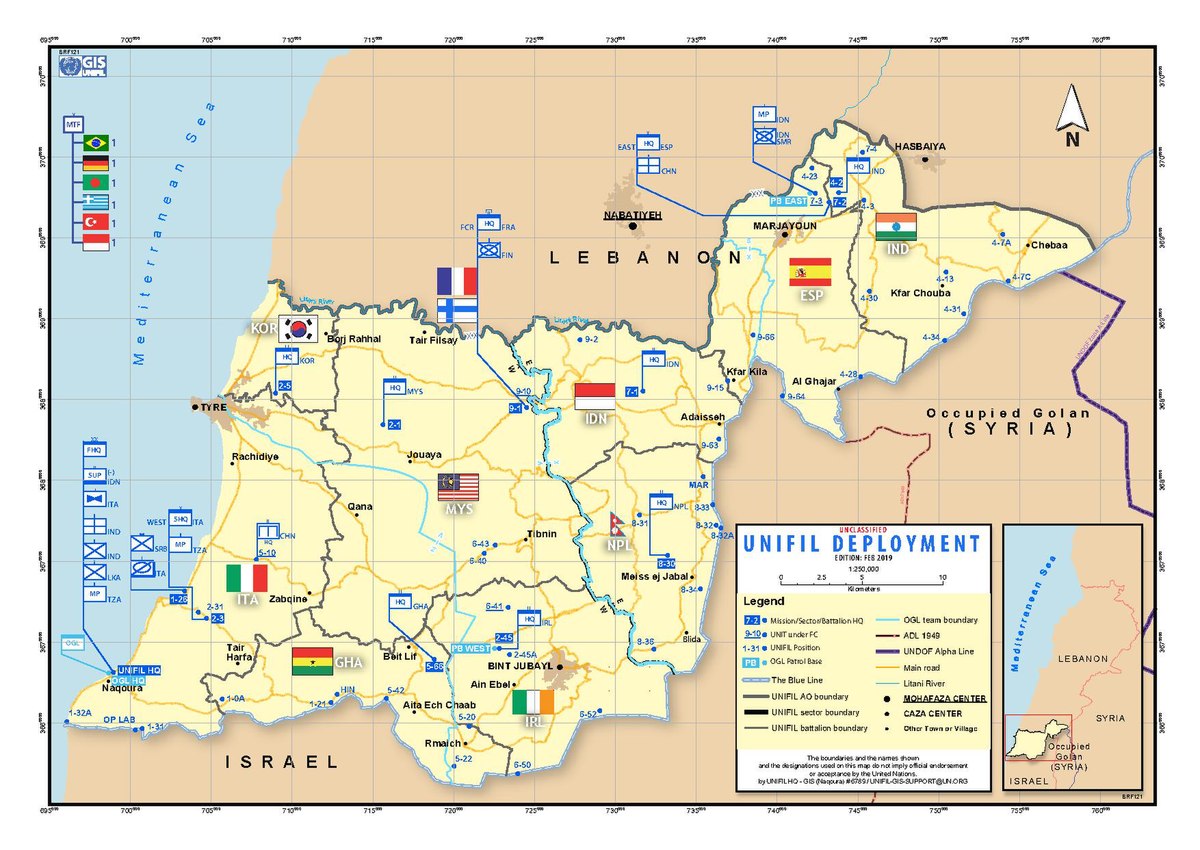
There were 700 soldiers on rotation in Lebanon, part of a multi-national peacekeeping force between Israel and Palestinian forces in Southern Lebanon. The soldiers were based at Camp Shamrock near the Lebanese town of Tibnin. It was a dangerous mission and by its end forty seven Irish soldiers had lost their lives on active duty. As a small nation with forces a long way from home, communications, in a pre-internet era, was limited. Larger nations had military radio stations to entertain the troops and keep them in touch with home, stations like AFN[2] for the American forces in Europe and BFBS[3] for British forces, which included a local station in Northern Ireland for the troops there who had been sent to the province in 1969.
Wikipedia

Dublin born members of the Irish Army in Lebanon began to send tapes home with recordings of greetings for family and friends but as the state broadcaster had no outlet for these tapes, once citing poor quality, the troops then sent their tapes to Radio Dublin broadcasting from Inchicore. A new show was created by the Inchicore based pirate station hosted by DJ Sylvie (Sylvia McClelland). The Sunday Independent[4] reported in 1978,

‘Behind the show is the pirate station’s leading lady, Sylvia McClelland who is a pin-up sweetheart of the troops. Sylvia is proud of the fan mail she gets from the Middle East especially one letter signed by 50 men of the mainly Dublin ‘A’ Company’

The troops were familiar with the pirate station before they left for their tour as during the period 1977-1979 and despite its illegal position, Radio Dublin moved from a weekend hobby station to seven days a week on air with a regular schedule. More and more tapes arrived and a show was created with the tapes played along with requested tunes often identified as sentimental pieces of music. Angela Meier, known on air as DJ Angie then began to present the ‘Lebanon Request Show’ on a Sunday morning. She was assisted by Valerie Coffey.


In March 1980, the Irish Government decided to send an entertainment party to the Lebanon to celebrate St. Patrick’s Day. Leading the entertainment was singer Geraldine Brannigan[5] and her band. The visit of Brannigan was sponsored by British Airways. RTE’s lack of interest or perhaps respect for the soldiers serving with UNIFIL can be demonstrated by the report in the Irish Army magazine 'An Cosantoir' in April 1980[6],

“the travel arrangements were made by British Airways which was just as well, because of venerable journalist on RTE announced that Miss Brannigan was ‘setting out for the Congo to entertain Irish Units there’”


Somehow Eamon Cooke[7], the owner of Radio Dublin managed to get seats on the British Airways sponsored flight that was taking Brannigan and her team, an RTE news crew and officials, for Angie and Valerie Coffey. In an interview in 2013 on the TV series ‘Dublin’s Pirate Days[8]’, Coffey recounted her experiences. When asked by Eddie Bohan what was her highlight of her time at Radio Dublin, she said her trip with the then eighteen year old Angie to Lebanon.

Coffey recalled that she remembers vividly,

‘Seeing Yasser Arafat[9] at the airport on their arrival and saying to Angie, ‘isn’t he gorgeous’’

The Irish Press

She also recalled how the Government did not want them to travel citing the dangers of the situation in Lebanon rather than the fact they were representing a pirate radio station. They were greeted by Sean Whelan[10], from the Irish Embassy in Lebanon, and transported from the Airport to a Beirut Hotel under heavy guard. The two Radio Dublin women were provided with their own personal bodyguards for their protection. They were initially not allowed to travel to the Irish contingent’s headquarters as they were not part of the official party and spent St Patrick’s Day at a reception given by the US ambassador in their Embassy in Beirut. The following day they managed to get onto an Irish army truck, painted in the white of the UN, and headed to Tibnin and visited troops at Camp Shamrock. They were warmly welcomed. On their return journey the road was bombed and they were forced to stay in a hospital overnight for their safety. They were told not to do any press interviews on their return to Dublin.

An Cosantoir

Shortly after their return to Dublin, the dangers of the mission became all too apparent when Privates Patrick Smallhorn from Dublin and Thomas Barrett from Cork, were shot dead on April 18th 1980 by Christian militia supporters of Major Haddad.


A collection was made by the colleagues of Dublin born Smallhorn. The donation was collected by Captain Donal Bracken and a cheque sent to DJ Angie Meier at Radio Dublin who then passed it onto the widow of the late Irish soldier.

‘This small token of our sympathy could never do justice to his memory but it may alleviate in a small way some of Mrs Smallhorn’s casual expenses, £150’ (The Irish Independent 21/8/1980).


The Lebanon request show hosted by Angie continued for many years after with the Sunday Mirror in June 1983 describing her as the ‘forces sweetheart’. The show by then had been expanded from sixty minutes to ninety.  


RTE itself began to include the Irish forces in the Lebanon with a show presented by the late Treasa Davison who died on Sept 4th 2001. According to Irish Times

‘A huge part of her broadcasting life was her association with the Irish Army and her annual forays to Lebanon, where she was officially the forces' sweetheart and had a tank named for her. On her retirement, she was "promoted" and made a special presentation.’

Valerie Coffey being interviewed on Dublin's Pirate Days for DCTV
The Interview in full is available on Vimeo

The first Davison show was prepared by RTE Radio and broadcast on August 10th 1978 over Cyprus National Radio, which could be heard in Lebanon. The show contained requests from family in Ireland dedicated to loved ones serving in Lebanon while Radio Dublin’s show was different as it included requests from soldiers in Lebanon for family back in Ireland, it also included taped messages which was new in the late 1970’s. According to the Irish Press[11],

‘RTE Radio is preparing record request programmes for the Irish troops in Lebanon and these will be broadcast over Cyprus Radio weekly, each Thursday as from August 10. Lebanon Requests will be presented by Treasa Davison and will be heard in Lebanon from 9.15 p.m. to 9.45 p.m. local time on 498 metres medium wave (602 kHz) and on 94.8Mhz on VHF. Those wishing to have requests played, or to semi messages to the Irish troops should send them to Treasa Davison.‘

 (The above mentioned owner of Radio Dublin was a convicted paedophile and if you are affected by any issues contained please seek support at https://www.drcc.ie/services/helpline/)


[1] The United Nations Interim Force In Lebanon

[2] The American Forces Network as part of the American Forces Radio & Television Service

[3] The British Forces Broadcasting Service

[4] November 5th 1978

[5] Later married to singer songwriter Phil Coutler

[6] ‘Geraldine’ An Cosantoir Vol. 40 No. 4 April 1980

[7] Later convicted of child sex crimes and died in prison

[8] Broadcast by Dublin Community Television and available on Vimeo

[9] Chairman of the Palestinian Liberation Organisation (PLO)

[10] Died suddenly in 2004 when serving as Ambassador to Turkey

[11] July 29th 1978

Monday, 20 July 2020

German Wireless off the Galway Coast during WW2


In the last weeks of World War II, the censorship rules were relaxed in Ireland and some of the stories hidden from the Irish public began to appear and they demonstrated the fragility of our neutrality. As details were revealed in the newspapers, the use of wireless as a weapon of battle began to emerge.

As the Battle of the Atlantic raged between the Germans and the Allies, their common enemy was the weather, as both sides battled for supremacy. For both sides, if you had the best metrological reports, your forces had the upper hand. For the Germans, the leading manufacturer of wireless equipment Siemens was tasked with developing ‘wireless’ technologies that could remotely report the weather from the Atlantic. They were highly ambitious and in 1943, the Germans on board a submarine, landed on the coast of Canada’s province of Newfoundland at Martin Bay and established a weather station codenamed KURT, that transmitted coded weather forecast back to the German Navy who used it to identify storms which helped in both identifying merchant convoys and allowing their naval fleet to hide from their British pursuers. According to a Naval warfare historian,
‘KURT was comprised of a telemetry system; 150-watt short-wave antenna; a 10-meter (33-foot) tall antenna mast complete with an anemometer and wind vane on its own separate shorter mast; a 150-watt Lorenz 150FK-type radio transmitter; various meteorological measuring instruments; and ten 100-kilogram (220-pound) steel barrels that contained nickel-cadmium and dry-cell high voltage batteries—each measuring 1 meter (3.3 feet) high by 47 centimetres (1.5 feet) in diameter.’

The WFL-26 station had six-month’s worth of batteries and would collect and record atmospheric conditions—automatically broadcasting the information back to German receiving stations via radio signals. The transmissions were sent for no more than two minutes (one of these precious minutes being allotted for warming up the system) every three hours on a 3940-kHz band, in coded form no less.'


 Siemen's technician Dr. Kurt Sommermeyer aboard U-537 in the Labrador Sea listening to signals transmitted by Weather Station Kurt (named for Sommermeyer) broadcasting from Marin Bay, Newfoundland, 
24th October 1943.

But not only on land did the Germans establish secret weather stations on the continent of North America, Siemens developed sea-based stations. These German ‘robot wireless stations’ were either dropped into the sea from aircraft or launched by submarines and anchored along the Western Irish coast. The Atlantic was an unforgiving sea and the tethers for these ‘robot’ stations often broke loose. One of these was anchored off the coast of Galway near Slyne Head. A fishing trawler from Inishturk snared the device in their nets and hauled it ashore. The Belfast Telegraph reported when the censorship rules were relaxed that,
‘This ingenious apparatus was anchored under the sea and at certain fixed time regulated by an electric clock, pushed up an aerial over the surface and transmitted a report of the prevailing weather conditions in the locality.’
For some of the most technically minded locals in Galway and Mayo, they were able to intercept the signals and while in 1944 and early 1945 the signals from the wireless off the Galway coast was coded, the Germans had dispensed with some of the coding towards the end of the war and local fishermen were taking advantage of the German weather forecasting to assist their fishing, finding themselves forewarned of incoming storm fronts.

The captured German weather station was handed over to the Irish Army who paid the fishermen £ 200 for the salvage of the weapon. It was then transported to Dublin and the Army’s G2 intelligence headquarters. The fishermen all along the West coast not only netted German weather buoys but they also scooped up Allied equipment in their nets. The Allied weather stations were handed over to the Irish authorities who then repatriated them back to Britain who then paid the fishermen salvage recompense. The Examiner reported,
‘During the last two years of the war, a large number of robot weather indicators were either washed ashore on the West Coast of Ireland or caught by fishermen in their nets and brought to ports on the West Coast. The indicators, it was learned yesterday, all bore British Admiralty markings, and were handed over by the Irish authorities to the British Admiralty. Salvage was paid in all cases to the finders. It is believed that the indicators were dropped by planes in the Atlantic and were driven to the Irish coast by winds and currents. They were designed to send out from their delicate mechanism at pre-determined intervals wireless signals regarding the weather in the North Atlantic. So far as can be ascertained, all the indicators were of British origin.’

The importance of the weather off the Irish coast and how it was transmitted especially to the British forces had come to the fore in 1944. According to an article in the Irish Independent,
‘As he cranked the telephone and delivered his news over a crackly line from Co Mayo's most westerly point, Irish Coast Guardsman and lighthouse keeper Ted Sweeney had no idea the lives of more than 150,000 Allied troops would hang on his words.
It was a fateful call. As he watched the barometer fall precipitously, Ted Sweeney's report from the Coast Guard station convinced General Dwight D Eisenhower to delay the D-Day invasion for 24 hours – a decision which averted a military catastrophe and changed the course of the Second World War.
This Friday, June 6, marks the 70th anniversary of the invasion of Normandy – codenamed Operation Overlord. The assault on Hitler's 'Fortress Europe' signalled the beginning of the end of the Nazi regime in Europe with the German surrender less than a year later. Some 5,000 ships and over 11,000 aircraft carried approximately 156,000 Allied troops into battle on D-Day across a 60-mile front.’

The secret wireless station that the Germans based in Newfoundland in 1943 was not discovered until 1977.