Sixty years ago, a Clondalkin
born Dubliner, Ronan O’Rahilly became a legend and began a revolution of the
airwaves. Ronan, who passed away in 2020 was the grandson of ‘The O’Rahilly’
who died during the 1916 Rising. On Easter Sunday March 29th 1964, broadcasting
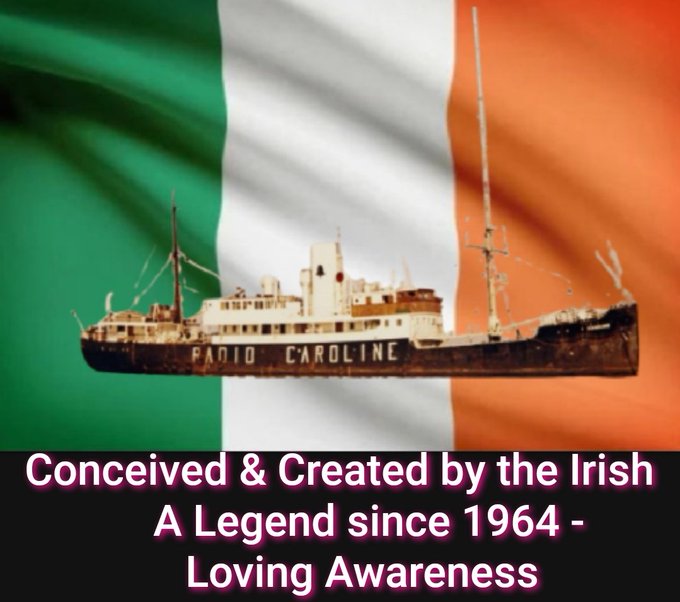
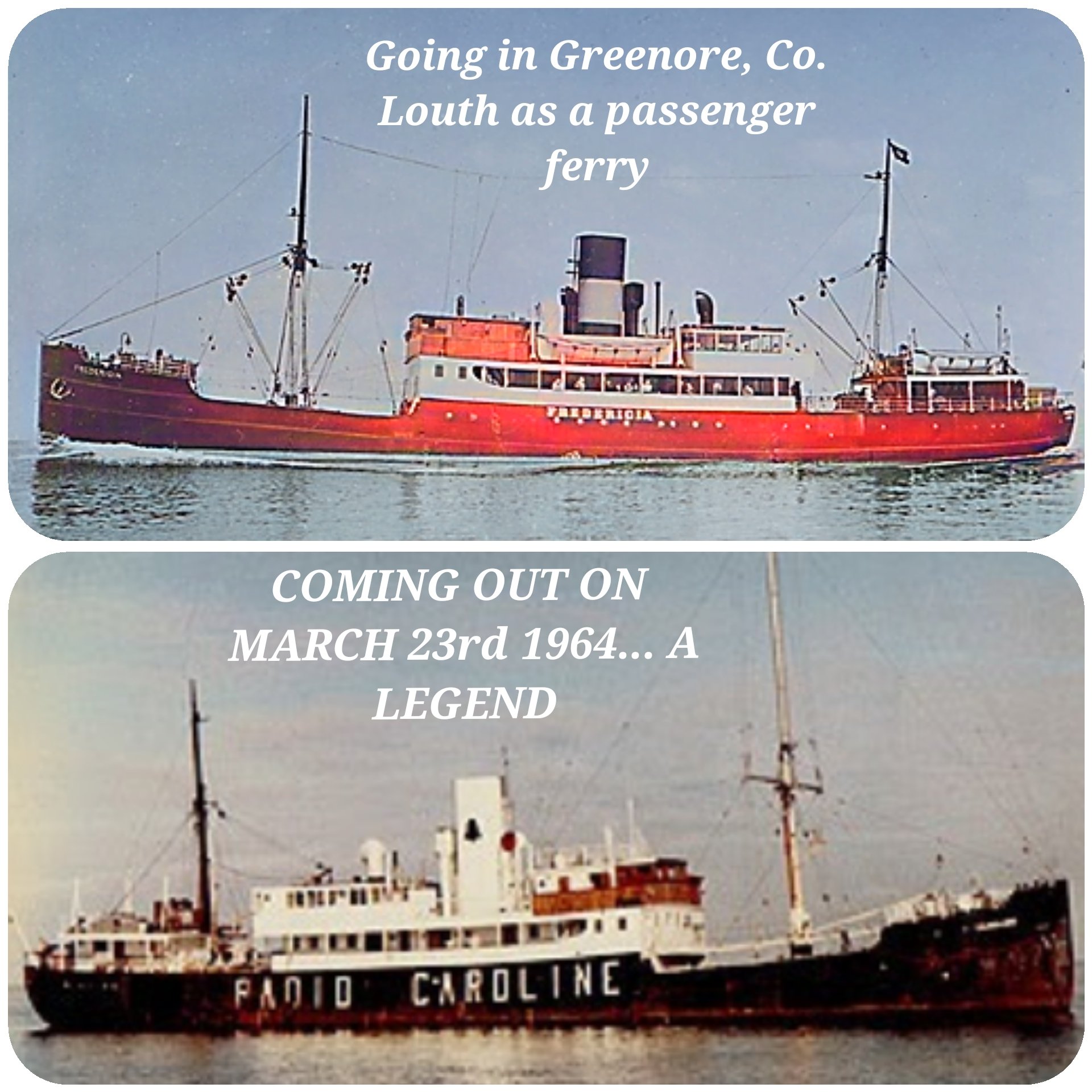
from a converted passenger ferry, the MV Fredericia, off the coast off Essex, Radio Caroline began
regular transmissions. It would cause a tsunami of change in the broadcasting
and music worlds. There was a large Irish dimension to the station because not
only was its founder born in Dublin but the ferry was converted into the iconic
radio station at the County Louth port of Greenore, owned by Ronan’s father Aodoghan.
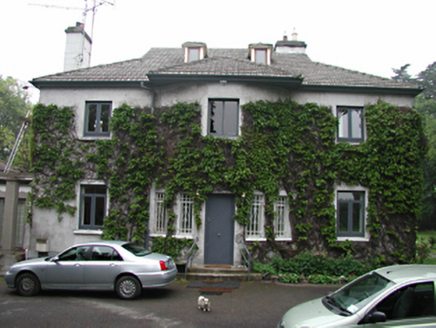
Moreen House in Clondalkin where Ronan was born
In July 1964, when
Caroline merged with another offshore pirate ship Radio Atlanta, the original
MV Caroline was moved from its moorings off the east coast of England to a new
location off Ramsey in the Isle of Man and was renamed as Radio Caroline North.
It became an instant hit across Ireland broadcasting initially on 199m and later 259m medium wave. Noel,
a brother of Eamonn Andrews, who famously presented What’s My Line and This is
Your Life on TV, had been working as a sports reporter for Radio Eireann. He
found himself broadcasting his first music show ‘The Andrews Live’ on Radio
Caroline on Tuesday December 1st 1964 as Caroline was now averaging a
listenership in the British Isles of 28 million every day. The first track he
played was from fellow Irishmen ‘The Batc helors’ who were now heading for
stardom in Britain and managed by major Caroline investor Belfast born Phil
Solomon. Noel proved to be a popular broadcaster with the housewives. He had
previously been on Radio Eireann presenting the ‘Housewives Choice’ programme.
When he returned to Radio Eireann from Radio Caroline, he was briefly relegated
to presenting Children’s programmes.
(Hear Noel Andrews on Caroline HERE courtesy of offshoreradio.co.uk)
When Caroline arrived off
the Manx coast, their transmissions were heard across Ireland and with it an
opportunity to grab some of the lucrative advertising pie. With this in mind,
Jim Craig was appointed Caroline’s representative in Ireland and they opened
offices in August 1964 at 27 Molesworth Street, dubbed Caroline House. Today
that building is incorporated into Buswells Hotel, directly across the road
from Leinster House.
The holding company for Caroline was known as Planet
Productions Limited with a subsidiary Planet Productions Eire Limited looking
after the advertising for the stations. On August 1st 1964 in advance of the introduction
of new UK laws, two directors of the Irish company, London based Richard
Trapnell and Dublin born Herman Good resigned. According to the Pirate Radio
Hall of Fame,
‘His friend Christopher Moore, a club DJ, provided
the musical knowledge and having served in the Merchant Navy, some nautical
experience too. Moore introduced O'Rahilly to a friend of his, Ian Ross. They
met one lunchtime around Easter 1963. O'Rahilly told Ross of his plans. Ross
was impressed by the project and thought that his father might be interested in
investing. Mr Ross Senior worked in the city and was an expert in raising
venture capital. That afternoon they squashed themselves into Ian Ross's MG
sports car and set off to the family home in Haslemere, Surrey. By that evening
the deal had been done. His father put in some of his own cash, as did his
friend John Sheffield, chairman of the Norcros Group of companies. Together
they and their firms put up over 80% of the launch capital - some £250,000 in
all. Other investors included Sheffield's son-in-law Jocelyn Stevens, then
proprietor of Queen magazine, and Dublin lawyer Herman Good. They all
recognised the plan had potential.’
American
born Chris Moore helped Ronan source the MV Frederica and when the ship had
been converted into Radio Caroline, he was the first voice heard on Easter Saturday
1964, playing the very first record The Rolling Stones’s ‘Not Fade Away’.
The news of the resignations
were reported in the Evening Herald on September 20th 1964,
The
resignations of District Justice
Herman Good, chairman and director, and Mr. R. L. Trapnell (London), director,
Planet Productions Ltd., selling agents for Radio Caroline became effective as from
August 1st
it was announced at a meeting of the board of directors.

The interesting fact here
is that Mr. Good, a solicitor, had been appointed as a temporary District Court
Judge earlier that year in February 1964. His position as judge was confirmed
in May 1968 when he was officially sworn in by the future President of Ireland
Cearbhaill O’Dalaigh and would have been a serving judge when MV Caroline was
being fitted out in Greenore and when he was director of Radio Caroline. It was
nor Justice Good’s first brush with pirate radio. Following a raid by the Gardai
on Radio Romeo illegal broadcasting from Clontarf in July 1965, in January 1966
father and son Thomas and Michael Rogers and Brian Clancy were charged with
illegal broadcasting. They were defended by their solicitor Herman Good, he
told the court,
‘This
is not a second Radio Caroline’.
The father was fined one
pound while the teenagers including his son were fined one shilling each. Brian
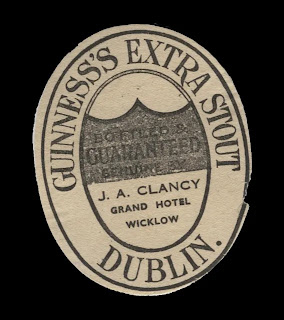
Clancy gave his address as the Grand Hotel, Wicklow which was owned by his
family.
Herman Good was born
Herman Good Gudansky in June 1906 in Dublin. In 1933 he married Belfast born
Sybil Wine and they lived on Merton Road in Rathmines. Justice Good would pass
away in November 1981.

The station also pandered
to its blossoming Irish audience by broadcasting Ireland’s Top 30 Chart Show
compiled by the New Spotlight magazine from April 1967. The top two that first week
were Sandie Shaw’s ‘Puppet on a String’ at number one and Sean Dunphy’s
Eurovision entry ‘If I Could Choose’ at number two. For The Dubliners and
Caroline "plugging" promoted success in the entertainment world.
According to Luke Kelly, plugging made them one of the first groups based in
Ireland to sell their music to the British public. Four years earlier they were
just nonentity’s, folk-singing around the public houses of Dublin. Then with
the assistance of Solomon, they could command fees of up to £6OO per night,
performing all over the UK, including London's Albert Hall. The station created
the Caroline Showband and in 1965 was instrumental in getting Longford born
Larry Cunningham to become the first Irish artiste to enter the British charts
and a subsequent appearance on BBC’s Top of the Pops. When the American singer
Jim Reeves, who Cunningham had supported on tour in Ireland, was tragically
killed in a plane crash, Sligo based solicitor Eddie Masterson wrote ‘A Tribute
to Jim Reeves’ which Larry recorded on King Records with his showband the
Mighty Avons. One of the Mighty Avon musicians was Jimmy Smith who would set up
the very successful Dublin based country and western pirate radio station TTTR
in the 1980’s.

On August 14th 1967, the
British Government introduced the new Marine Offences Act to curtail the
success of the offshore pirates. The radio ships and forts could no longer be
supplied from the British Mainland and advertising revenue was restricted. This
immediately affected Caroline South who renamed themselves as Radio Caroline
International but North continued as normal as the Isle of Man Government held
out against their Westminster masters until September 1st to ratify the new
law, described in the Manx Parliament as Black Friday.
With the British mainland
and now the Isle of Man cut from resupplying Caroline North, the Drogheda Argus
reported on September 15th,
‘Another
chapter in the Marine Broadcasting controversy began last Thursday afternoon,
when a 40-ton Dutch tender entered Dundalk quays. Twenty four hours later, the
tender, Offshore III, left the wharf laden with groceries for Radio Caroline.
The supplies consisted of breed, milk, meat and vegetables, and were purchased
in a Dundalk store. Fresh water was also put on board. It is generally assumed
that these supplies are for the crew and personnel of the "sound of the
notion" Radio Caroline North.’
In February 1968, the
Dundalk port authority’s annual returns shows that in 1967, the port had 268 movements
in and out, 21 of these in four months were made by Radio Caroline’s supply
boat, making up 8% of the movements. The 40 ton tender Offshore III was owned
by the Wijsmuller Brothers in Holland and arrived in to Dundalk to collect,
fuel, water and food for the crew and equipment. Three tenders were operated
out of Holland by the Wijsmuller brothers. 'Offshore I' and 'Offshore II'
supplied the ship on the east coast of England while the larger 'Offshore III' supplied
Caroline North. Prior to the new Marine Offences Act the Offshore III would
load in Douglas or Dublin to resupply Caroline.
According to the Pirate
Radio Hall of Fame,
‘Although
the two Caroline ships were continuing to broadcast, behind the scenes, it was
a tough time. The isolated DJs had to endure long stints at sea and dreadful
tender journeys when they did finally get some leave. And, for the bosses, the
financial situation was proving difficult. With the ships being supplied and
crewed from Holland, the station's money problems were exacerbated when the UK
devalued the pound in November 1967. With only a limited income, bills weren't
paid on time and, as the months passed, a substantial debt built up with the
Wijsmuller tug and salvage company. This firm was responsible for crewing and
servicing the two radio ships and, as the money owed reached £70,000, one of
the Wijsmuller brothers decided that enough was enough. In an effort to get his
money, he ordered his men to impound the two Caroline vessels. On March 2nd
1968 Caroline North's programming finished, as usual on a Saturday, with the
late ‘Daffy’ Don Allen’s ‘Country & Western Jamboree’. Canadian born
Don would be found later broadcasting on numerous Irish pirate radio stations
including Radio West in Mullingar and even had a show on RTE FM3, the
forerunner of Lyric FM. Soon after the station closed for the night the ship
was boarded by men working for Wijsmuller. Caroline North never returned to the
air, the ship was towed by the Wijsmuller tug Utrecht.
In November 1968 before
the High Court in Dublin a winding up order was placed before Mr. Justice Kenny
to wind up Planet Productions Limited moving all Caroline’s operations abroad.
Caroline still broadcasts
from the Ross Revenge ship off the East coast of England but is now licensed
but the music style and ethos is still the same and can be heard clearly at
night in Ireland on 648khz.
Radio
Caroline revolutionized radio for a generation, shining a light on a dark
world. It led to the creation of BBC Radio 1 to compete for the ever-growing
audience of young listeners. It provided an outlet for new music and it gave
enjoyment to millions. There’s a reverence for what Caroline was. It was a
rebel, it was an influencer, it was a genuine attempt to provide the listening
public with what they wanted to hear.
In
Ireland, Caroline opened up the possibility of an alternative to State media,
and while we never had a pirate radio ship broadcasting into the country,
Caroline’s success created a community of pirate radio pioneers across Ireland
(some using the Caroline moniker in homage) and this pirate radio tidal wave
eventually in the seventies and eighties, created the radio industry that
broadcasts today.
Sources
The Pirate Radio Hall of
Fame
DX Archive
World Radio History
The 1965 Radio Caroline
Annual
The Irish Newspaper
Archives
The British Newspaper
Archives
National Inventory of
Architectural Heritage Ireland
The Irish National
Archives
Offshore Radio
Paul Rusling
Ancestry.com





%20(1).png)
.jpg)





%20(1).png)