Communications takes many forms. It can be communicating verbally to
each other or travelling from one town to another with news and information. Modern
communications include wireless telegraphy as in ship to shore or the radio
broadcasting of today as voices through the ether communicates with their
listeners. ‘Six degrees of separation’ is the idea that on average people and events are
six, or fewer, social connections away from each other. With this in mind, one
can postulate that without the building of the first turnpike road in Ireland
in the 1730’s we would not be able to listen to Morning Ireland on RTE, Ian
Dempsey on Today FM, the Strawberry Alarm Clock on FM 104 or the breakfast show
on 96FM in Cork. That journey from the innovative turnpike to entertaining tones
of Ian Dempsey, will take us from the first toll road and creating the
connection with rural Ireland, to the first major mass transportation company
in Ireland described as the Ryanair of its day, to the greatest Irish whiskey
export of all time and onwards to harnessing the radio waves, eventually
reaching the multitude of radio studios and bedroom podcasters across Ireland
and of course Ian Dempsey.
In the mid-18th century people rarely
travelled further than a day’s walk from home. A person of means would have
access to a horse and buggy but the roads were bad often subject to flooding
and damage as the loads increased. The result was the Turnpike, a tolled road of
better quality that often varied in both length and cost but massively improved
transportation across the country. The first Irish turnpike road was opened from
Dublin to Kilcullen in County Kildare in 1729. They expanded quickly. A major
investment in better roads led directly to the success of one entrepreneur who
made use of the growing number of these toll roads which initially radiated
from Dublin but later connected many of the growing towns in the South East and
South of the island.
As the network of turnpikes expanded, far away from
Ireland in the Lombardy region of Italy, Carlo Bianconi was born in 1786.
According to his biographer, Samuel Smiles,
‘learning took little effect on him’.
Regarded as a ‘dunce’ in school, his parents wanted him
to gain experience outside their small enclave and importantly for them, allow
their son to avoid the compulsory military service enforced at the time. A family
friend, Andrea Faroni, agreed to take the young sixteen year old and a couple
of other local lads on an apprenticeship in painting framing and selling. The
young Bianconi left behind his parents as well as three brothers and a sister,
walking out of Italy into Switzerland and eventually reaching England. This was
the original plan but Faroni decided to go one step further to the edge of
Europe and travelled across the Irish Sea to Dublin.
After arriving in Dublin in 1802, Faroni and his
charges stayed in Temple Bar near the Essex Bridge. They began selling framed
prints around Dublin but the young Italian found it difficult without any grasp
of the English language. The young Carlo knew however he had a better chance of
success by increasing his English and by anglicizing his name to Charles. Like
pioneers or explorers Faroni and the four apprentices left the sanctuary of
Dublin and headed south to Waterford, where much of the gold they used to guild
the picture frames were imported. At one point Charles Bianconi was arrested in
Passage when he was caught selling prints of the disgraced Napoleon, who had
just been defeated by the British at Waterloo. After a couple of nights in the
police cells he was released. The team carried their heavy load of wares from
town to town, walking many miles, it was back breaking work. In 1804, his
apprenticeship ended with Faroni and the young Bianconi rejected the offer to
return home to Italy. While in Waterford he had met with Edmund Rice, the
founder of the Christian Brothers, and was the beneficiary of an education
which opened his eyes to a multitude of possibilities in now his adopted
homeland.

In 1806, Bianconi moved to Carrick-on-Suir. He
travelled to Waterford on Tom Morrissey’s boat along the River Suir to obtain
the gold for his gilding process. By boat it was a distance of twenty miles and
was subject to the vagaries of the tides. By road, it was a distance of only 12
miles but it had to be walked and with a heavy load, the boat, despite its slow
speed of travel, was the better option. In 1809, he moved once again to Clonmel
and continued to earn a good living selling prints, travelling by foot and the
slow boat back to Carrick – on – Suir and Waterford.
It was now that the young Italian struck upon an idea
that would revolutionize travel in Ireland. On July 5th 1815 at
Hearn’s Hotel in Clonmel, a horse and buggy were readied for the departure of
the first Bianconi car that would travel the twelve miles from Clonmel to
Cahir. That first trip carried a driver and six passengers. It was not overly
popular but the shrewd Bianconi put a slower coach on the route and pointed to
how efficient his brightly yellow coloured ‘Bian’ car was. The following year
the Clonmel to Waterford and to Carrick-on-Suir routes were added. The new
regular passenger service, despite not having any protection against the inclement
Irish weather, departed, and arrived on time and travelled even if there were
no paying passengers on board. The convenience of the cars and its
affordability became popular and the routes continued to expand. Bianconi was
able to connect with both the Royal[1]
and the Grand Canals[2]
that travelled from Dublin to the River Shannon. From one horse and a cart, the
Bianconi Cars developed into two, four and six horse transports carrying more
and more passengers and cargo. He delivered the mail from outlying areas to
central hubs for the Royal Mail and earned a reputation as being punctual and
safe, employing his own security guards on dangerous routes or for expensive cargos.

Charles Bianconi became an important member of the
Clonmel community earning himself Irish (British ruled Ireland) citizenship. He
married the daughter of a well-known Dublin stockbroker, Eliza Hayes in 1827, who
was twenty years his junior. He would move into a palatial house known as
Longfield and the couple would have three children. The first born daughter died
relatively young as did his son. His son had married the granddaughter of the
Great Emancipator Daniel O’Connell, whom Bianconi was a great supporter of.
Charles Bianconi became Mayor of Clonmel and continued to expand his flourishing
business. His cars were affordable for the working/farmer classes and opened up
Ireland for exploration and business development. From Dublin his cars departed
from the Hibernian Hotel on Dawson Street and as they journeyed, Bianconi Inns
opened along routes providing rest periods, overnight stays and changing
facilities for fresh horses. Even when the railways arrived in Ireland, the
first section opening in 1837 and they expanded rapidly, he adapted. The rail
lines made some of his routes redundant but he adjusted connecting new towns to
the railway stations hubs, his web was radiating across much of Ireland.

He provided employment for over one hundred and sixty
drivers on his one hundred cars, known as ‘Finn McCool’s’ and ‘Massey Dawson’s’[3].
His drivers were regarded as very civil, well turned out, wearing similar hat
wear to identify their position. Bianconi required punctuality, truthfulness,
honesty and most importantly sobriety. In many cases, drivers who proved
themselves ‘Bianconi men’ could pass on their position to a family member upon
retirement. When a driver became too ill to work or died, Bianconi insured that
the family were looked after financially and educationally. Workers were only
required to work six days, a novel approach in the mid 1800’s. He was the
largest employer in Clonmel especially when he opened his own factory to build
and repair his fleet of vehicles. Along his routes, there were changing
stations for the horses each employing grooms and blacksmiths. The so called ‘Bianconi
Inns’ developed in over one hundred and fifty stops each one providing direct
employment and indirect employment through supplies. He put many smaller coach companies
out of business or bought them out, these were usually operator by owners of
Inns or Taverns. One commentator wrote about a rival company, McCarthy’s in
Kanturk,
‘his cars in shape and size
resemble Bianconi’s, but here the comparison ends. McCarthy’s horses are poor
starved hacks, whereas those of Bianconi are fine, well fed and strong’.[4]
When Bianconi began, his timing was perfect as there
was an abundance of good horses available that had been readied to fight in the
Napoleonic Wars, but with the defeat of Napoleon, there was over supply and he
was able to purchase horses relatively cheaply. At the height of his business
in 1857, Bianconi had 1,300 horses travelling 3,800miles on 23 routes. The
local farmers and economies boomed as he purchased 4,000 tons of hays and
30,000 barrels of oats per year. He was as generous to his horses as his men. Despite
his demand leading to price increases, he purchased the best of horses and they
were well treated. He once wrote,
‘Experience teaches me
that I can work a horse eight miles per day, six days in the week, much better
than I can six miles for seven days; and by not working on Sundays, I effect a
saving of 12 per cent.’
This from a speech delivered by Bianconi at the Cork
meeting of the British Association for the Advancement of Science on August
19th, 1843.
With the continued improvements of the turnpikes, the
arrival of the canals and the railways, the time spent traveling greatly
reduced for the Irish passengers. For example, in 1757 a traveller from Dublin
to Kilkenny would be on the road for almost two days with an overnight stay at
Athy on the outward journey and in Kilcullen on the inward return journey. By
1825 that journey time had been reduced to eleven hours and with the arrival of
the railway by 1860, it took only 3 hours and twenty minutes. Similarly Dublin to Cork in
1793 was advertised as taking over two days, in 1820 that was reduced to just
over one day and to 6 hours and 50 minutes when the first train ran on that
route.
By 1866, the transport entrepreneur had decided to
retire and with his son and heir having predeased him, he rewarded the hard
work of those who ran his business by selling off his routes and Inns to the
workers of the Bianconi company for reasonable and affordable amounts.
During his tenure as the head of the company, he wanted
to ensure that his livestock received the best of treatment and decided to ask for
a nephew in Italy to be despatched to Ireland to become the senior veterinarian,
looking after both the horses and the other vets in his employ. Giuseppe
Marconi arrived in Ireland and was based in both Clonmel and Waterford. Giuseppe
was born in the village of Porretta in the shadow of the Apennine Hills on July
5th 1823. He had inherited some of his father’s wealth but was
himself a hard worker and generated considerable wealth. He married Giulia De Renoli
in January 1855 and their son Luigi was born the following October. Just a
couple of years later Giulia died, leaving Giuseppe a single father and a
widower. In 1860, he was in London where
he invested in a café selling penny ices and a music hall near Charing Cross with
former neighbours from Italy, the Gatti brothers. His journey then to Ireland
was short when summoned by Bianconi. He would travel to and from the Hibernian
Hotel on Dawson Street on a Bianconi coach to Clonmel. He would make the return
journey through Waterford to New Ross, Enniscorthy and onwards towards Arklow
and Bray before reaching Dublin.

Meanwhile Andrew Jameson, son of whiskey magnate John Jameson,
departed from the Bow Street Distillery in Dublin and set up his own whiskey
still on the River Urrin, a tributary of the Slaney, at Fairfield outside
Enniscorthy in 1818. The area is still known as The Stil. Andrew and his second
wife Margaret Millar acquired nearby Daphne Castle in 1823 from the Pounden
family. Andrew and Margaret had five daughters, all born at Daphne − Elizabeth,
Helen, Janet, Isabella, and the youngest Annie was born in 1839[5]. Annie’s family also bought an elegant house in
Dublin known as Montrose House. Montrose House, perhaps more familiar to you
all now as a backdrop to many RTE News reports. Montrose House is today part of
the RTE complex in Donnybrook.

According to Maria Marconi, Annie Jameson, her
grandmother was.
‘a lovely girl, charming and vivacious. The whole
family had a passion for music. It was their favourite occupation and they used
to play different instruments together in the evenings. Annie played the piano
and she also had a beautiful soprano voice. To her family’s disapproval (it was
quite out of the question for a young girl of good family to become an opera
singer in those days), she was offered an engagement to sing at the Covent
Garden Opera House in London. She was forbidden to accept but after much
discussion and argument she was allowed to go to Italy to study singing with a
famous teacher of the time. The Jameson company had contacts with a Bologna banker
named De Regoli and Annie went to stay with his family. De Regoli’s daughter
had died while giving birth to a son, Luigi, and their widowed son-in-law
Giuseppe Marconi spent much of his time with them. He was charming and lively
with a good sense of humour and he and Annie soon fell in love.
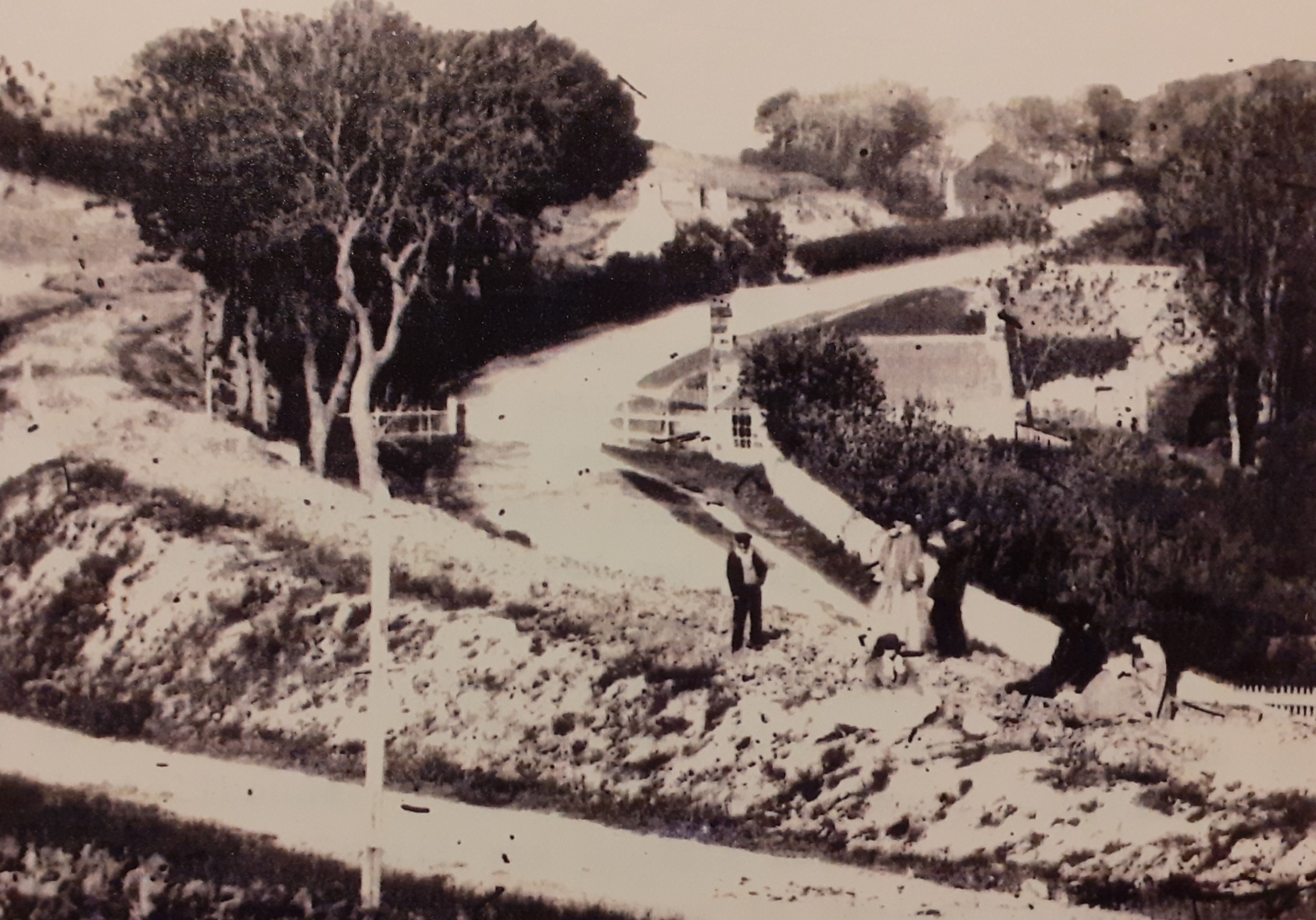
When Annie returned home to Ireland, she asked permission to marry Giuseppe[6]. Her family was just as shocked at Annie’s choice of husband as they had been at the thought of her singing at Covent Garden and they refused consent to the marriage. Annie was ordered to forget him and, apparently obedient, she remained at home and led a social life going to parties and meeting suitable young men approved by her family. However, she continued to correspond secretly with Giuseppe. When she came of age she ran away from home and crossed the stormy water of the channel to France while Giuseppe drove his carriage across the Alps. They met in Boulogne-Sur-Mer, a romantic town by the sand dunes and were married there on April 16th 1864. ‘

It is perhaps a more honest explanation as to the
joining of Signor Marconi and Annie Jameson, that they had met while Marconi
was still in Ireland. Secretly carrying on their liaison when Marconi continued
on his travels. According to a report in the Weekly Irish Times newspaper on July
1st 1901, it stated,
‘After some time, he sent to Italy for his nephew
to act as veterinary superintendent of his stables and this man from his daring
riding, his knowledge of horses and his attractive appearance, soon was golden
opinions for himself in County Tipperary. His first stay in Ireland was not
however of long duration, for having fallen deeply in love with a young Irish
lady, whom he had met in the hunting field. He married her without the consent
of her parents and it was thought better both by her people and by Mr.
Bianconi, that the youthful couple should begin their married life in Italy,’
They settled at Villa Griffone, outside Bologna. Annie was reconciled with her Jameson family after the birth of her first child Alfonso in 1865 but it would be the birth of her second son nine years later that would lead to another communication revolution. Guglielmo Marconi was born on April 25th 1874. For four years, from the age of two, Guglielmo and Alfonso were brought up by Annie in the English town of Bedford. As children, the family would often make summer visits home to Daphne Castle. Annie ensured that Guglielmo spoke excellent English but he laboured in school. Guglielmo Marconi was as much Irish as he was Italian and without that Irish connection and the finances it generated, he would not be seen today as The Father of Radio.

In 1894 Marconi began experiments at his home in Bologna but despite his best efforts to get the Italian authorities to embrace the importance of his wireless telegraphy, He needed a commercial backer and it was one of his mother’s cousins Henry Jameson Davis who stepped in and began to publicise Marconi’s Wireless Telegraphy system. Annie’s fathers’ distillery at Fairfield in Enniscorthy was put out of business in 1840 by a temperance crusade led by Father Theobald Mathew, who had actually been a friend of Bianconi. Jameson rented his property to a local businessman Abraham Davis who would marry Annie’s older sister Helen in 1850. Their second son was Henry Jameson Davis was born in 1854.

Marconi, who had been
encouraged to learn English by his Irish born mother travelled to England in 1896 to demonstrate his invention to the
British post office. Jameson Davis became the first Managing Director of the
newly incorporated Wireless Telegraph and Signal Company in 1897 generating
almost £100,000 in capital to obtain the patent rights for the Marconi system
worldwide. Some of the other investors were James Fitzgerald Bannatyne from
Limerick. He would serve as Deputy Lord Mayor of Limerick and was involved in
the milling business until his company was bought by the Goodbody Milling
Company. Henry Obre, a Cork Merchant who lived at Fort Villa, Queenstown (died
1906), Thomas Wiles, SW Ellerby, Frank Wilson, Cyril Bennet, Robert Patterson,
and Goodbody’s who were all involved in the Milling and granary business.
Some of Marconi’s most exciting progressions in wireless technology happened
in Ireland. His first experiments linked Rathlin Island with Ballycastle in
1898. In that same year, the first use of the new medium in sports journalism
took place in Dun Laoghaire when reports on the local annual regatta were sent
by Marconi from the Flying Huntress steam paddle tugboat in Dublin Bay to a
receiving station in the harbourmasters house on the quayside and then
telephoned to the Daily Express Office who immediately published the race
updates. In 1916 it was a 1.5 kilowatt Marconi transmitter that was used to
broadcast communiques to the listening world making Ireland the first nation in
the world to be declared by radio. In 1923 Marconi operated the first licensed
radio station in Ireland 2BP in August 1923 and it was a Marconi transmitter
that was used by 2RN to get on the air in January 1926. 2RN would morph into
Radio Eireann and then on to today’s Radio Telifis Eireann (RTE). It would be
also the Marconi Company whose television transmission equipment that would
outlast John Logie Baird’s experimental equipment when the BBC launched a
television service.

Marconi also married an Irish woman, Lady Beatrice O’Brien, the daughter
of the Lord of Inchiquin whose home was Dromoland Castle in County Clare. She
was the great niece of the Irish Nationalist William Smith O’Brien. She married
Marconi on March 16th 1905 but separated in 1918 and divorced in 1924. The
Belfast Newsletter reported,
‘He asked her to become his
wife, ' but her mother objected, saying so many weddings turned out badly that
she refused to let her" daughter marry if the bond was indissoluble, as it
was for Roman Catholics. This difficulty was only overcome by Senator Marconi
entering into an agreement, not only with the Hon. Beatrice O’Brien but also
with her mother, whereby it was expressly stated that cither party could sue
for divorce, at any time he or she thought fit.’
The success of radio is global with thousands of stations broadcasting
news, sports, opinions and entertainment. Ireland fell in love with radio and in
the seventies and eighties a revolution took place which broke RTE’s monopoly.
The proliferation of pirate radio drove the campaign to create a new broadcasting
landscape in Ireland. These stations came on air using Marconi technology and equipment.
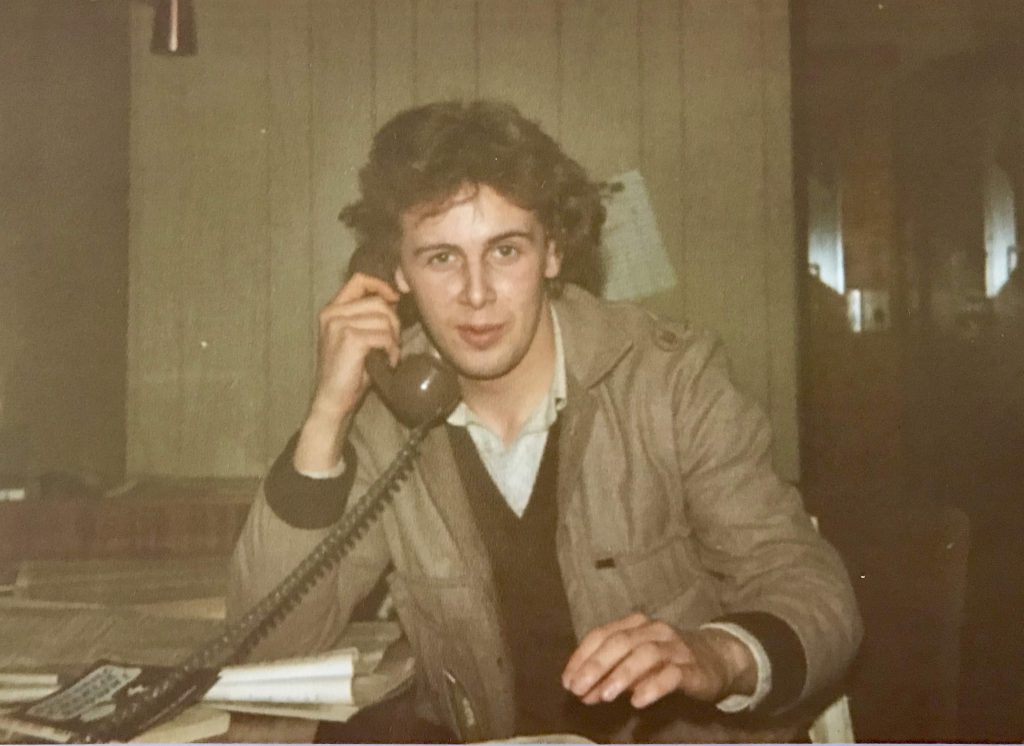
One of those illegal broadcasters was Ian Dempsey on Alternative Radio Dublin
who found himself going legit when he joined the State broadcaster’s second
channel RTE Radio 2. When the clamour for independent radio and television
reached a crescendo, a demand created by the choice offered by pirate radio,
independent commercial radio became a reality. Following the ill-fated Century
Radio, the national franchise was won by Radio Ireland which was rebranded as
Today FM. One of the major rating winners on Today FM is Ian Dempsey.

The lineage of Marconi’s efforts in Ireland from the first turnpike
built, has eventually led to Ian Dempsey at Today FM, the independent national
commercial radio station which is based at Marconi House on Digges Lane. If the
turnpikes had not been built, the roads would not have been as good or as
extensive enough for Charles Bianconi’s transport company to thrive and grow. It
connected communities. If it could not grow there would have been no need for
hundreds of horses and therefore not require the arrival of Giuseppe Marconi to
Ireland to tend to Bianconi’s stables. If Marconi had not visited Ireland, he
may have never met and married Annie Jameson. While radio was an inevitability,
Marconi, the second son of Giuseppe and Annie, and the key influencer in both
its spread and success, would not have been born if his parents had not met. Without
Marconi, radio would not be the success in Ireland today that it is and Ian
Dempsey might be driving a Luas tram rather than broadcasting to a nation.
[1]
Royal Canal Construction began 1790 and completed 1817
[2]
Grand Canal construction began 1756 and completed in 1804
[3]
The Bian’s by Ivor Herring
[4] Bianconi’s
Cars by Thomas P O’Neill
[5] ‘Marconi My Beloved’ by
Maria C. Marconi
[6] A
widower