

Tuesday, 9 April 2013

THE HISTORY OF THE IRISH TV QUIZ SHOW - PART FIVE
What constitutes a quiz show? – Deal or No Deal is a game show as is The National Lottery Games like Winning Streak where luck plays a major role. Quiz shows are where questions and their answers whether general knowledge or specialized decides the winner.
In 2013 the British channels BBC, ITV and Channel 4 broadcast numerous quiz formats especially on their afternoon schedules. RTE do not broadcast any except for quizzes aimed at the youth audience. TV3 broadcast Junior Mastermind, while TG4 broadcasts Ceist GAA. None of these shows offer major cash prizes for successful contestants.

WHO WANTS TO BE A MILLIONAIRE
17 Oct 2000 – March 29th 2002
Gay Byrne
RTERTE imported this format from the Celador created show of the same name broadcast on ITV and hosted by Chris Tarrant. RTE’s show was sponsored by Eircom allowing the station to initially offer a prize fund of £1,000,000 but before its second series the Euro currency had been introduced reducing the top prize to €1.000.000 as a direct conversions would be €1.270.000. When Eircom completed sponsorship RTE were unable to find a replacement and the show ended.

90 SECONDS
October 2000
Tomas O’Brannigan
TG4

IT'S A FAMILY AFFAIR
2000 - 2002
Dara O'Brian
RTE
The programme was produced by Green Inc productions and ran for two series.
SCHOOLS CHALLENGE
2001
RTE
A thirty minute schools quiz produced by Straight Forward TV

THE WEAKEST LINK
2001 - 2002
Eamon Dunphy
TV3
An Irish version of the BBC programme that was presented by Anne Robinson. Recorded at the RTE studios, the show lasted just one season. Eamon Dunphy is more famous for his sports journalism and as a panellist on RTE’s soccer broadcasts

AT THE END OF THE DAY
July 29th 2002 – September 16th 2002
Tracy Piggott
RTE
A sports quiz game with two resident team captains, Joe Brolly and Tony Cascarino. The show was made by Setanta Television for broadcast on RTE

THE FAME GAME
2002 - 2006
Caroline Monahan
RTE
The Fame Game takes three fans of different celebrities, who compete against each other in a studio-based quiz show for the chance to go and meet their idol and was produced by Adare Productions

IT'S NOT THE ANSWER
2002 – 2003
Bryan Smyth
RTE
Two seasons of 27 thirty minute shows presented by Bryan Smyth. The show was produced by Green Inc Productions

LAST ONE STANDING
2003
Jon Slattery
RTE
This general knowledge quiz was produced by Mind the Gap/Ludus Entertainment for RTÉ. Each programme had four contestants battling it out in rapid fire rounds of multiple choice questions, against each other and against the clock, to see who would be the Last One Standing and take home the prize money.

ALL KINDS OF EVERYTHING
2003 - 2004
Ryan Tubridy
RTE
RTÉ Television's comedy quiz show 'All Kinds of Everything' presented by Ryan Tubridy before he earned the hosting role on The Late Late Show.

THE MEMORIZER
2005
Kathryn Thomas / Aidan Power
RTE
This was a RTÉ Television young people's quiz series 'The Memoriser', recorded in November 2005. A celebrity special was broadcast on Christmas Day 2005. It starred Francis Boylan, Ray D'Arcy, Damien McCaul and Ian Dempsey - all four guests were former presenters of RTÉ Television's 'The Den'.
The show was made by Adare Productions for RTÉ.

CRUINEASS! / Game Planets
2005 – present
Páidí Ó Lionáird
TG4
Produced by Telegael Cruinneas was a children’s quiz show where children travel all over the solar system, from planet to planet, answering questions and winning great prizes. Now in it’s fifth year, this show is produced for RTÉ and broadcast on TG4.

HQ - HOLIDAY QUIZ
March 26th 2006 (1 Season)
Sean Moncrieff
RTE
The series was made by Vision Independent Productions for RTÉ; it combined elements of a travel programme with a family quiz show.

BOG STOP
2008 – present
Máire Treasa Ní Dhubhghaill
TG4
Produced by Abu Media
TEST THE TEACHER
2009
Kathryn McKiernan
RTE

PODGE & RODGE'S STICKIT INN
October 2009
RTE
Based on pub table quiz formula with celebrity guests.

WATCH YOUR LANGUAGE
2009
Roisín Ni Thomain
RTE‘Watch Your Language’ was a rapid-fire language quizshow for 8-12 year olds from around the country.
Thursday, 28 March 2013
THE HISTORY OF THE IRISH TV QUIZ SHOW - PART FOUR
What constitutes a quiz show? – Deal or No Deal is a game show as is The National Lottery Games like Winning Streak where luck plays a major role. Quiz shows are where questions and their answers whether general knowledge or specialized decides the winner.
In 2013 the British channels BBC, ITV and Channel 4 broadcast numerous quiz formats especially on their afternoon schedules. RTE do not broadcast any except for quizzes aimed at the youth audience. TV3 broadcast Junior Mastermind, while TG4 broadcasts Ceist GAA. None of these shows offer major cash prizes for successful contestants.

Challenging Times
1991 - 2001
Kevin Myers
RTE
The show was very similar in nature to the BBC’s University Challenge. The first winners were St Patricks College Maynooth while the winners of the final series were University College Cork. The show was hosted by Irish Times journalist Kevin Myers

Blackboard Jungle
September 18th 1991 – July 31st 1997
Ray Darcy
RTE
This was a general knowledge quiz broadcast on RTE 2 and featuring teams from secondary schools across the country. Produced by Gerard Heffernan and Frontier Films

Lyrics Board
1992 -
Aonghas McAnally/Linda Martin
RTE
'The Lyrics Board' was produced by 'Like It Love It' for RTÉ. Two opposing teams competed to recognise song titles from words on a board and to individually perform songs. Each team captain sat in front of a set of keyboards. Team captain were former Eurovision winner Paul Harrington and The show was one of RTE’s most successful format with it being exported to over a dozen countries.

Hot Milk & Pepper
September 8th 1996 – April 23rd 1999
Brendan O’Carroll
'Brendan O'Carroll's Hot Milk and Pepper' was made by Frontier Films for RTÉ and featured two families of four competing against each other

Dodge The Question
July 8th 1996 - 1997
Jonathan Bowman
RTE
'Dodge the Question' was made by Like It, Love It for RTE

Gridlock
14 September 1998 (One Season)
Derek Mooney
RTE
A schools based quiz created by Frontier Films and was made to replace Blackboard Jungle with a similar format for secondary school students answering general knowledge questions and problem solving
Saturday, 23 March 2013
A SHOCKED & DISTRESSED IRELAND
The arrival of 2RN, The Irish Free State’s entry in the broadcasting world on January 1st 1926 would alter the Irish people and their persona more than the introduction of the telegraph or television. Rural Ireland would be radically altered with the arrival of the station and radio.
Urban areas were already familiar with radio as crystal sets and imported radio sets allowed the listener to tune into transmissions from the UK, Europe and even the east coast of America. Even before 1926 the monetary value of radio broadcasts were being exploited as village fairs, fetes and charity events advertised ‘Dances by Wireless’. These events were ‘paid in’ events with music relayed by a radio set on a stage and people dancing on the main floor, an early form of nightclub or for another generation The TV Club. These events were often organised by the local parish priest to raise funds for local charities, church and school repairs or for the running of the church itself. The parochial organisers often saw themselves as the ‘censor in chief’ monitoring what their flock listened to and protecting the moral fibre of the community.
For many the introduction of 2RN was two years too late as 2BE had begun broadcasting from Belfast in 1924. The problem for many listeners in the Free State was that the wounds of a War of Independence and a Civil War were still raw and listening to a station that promoted events around the Loyalist Twelfth of July and the playing of the British National Anthem at the end of each evening’s broadcast was too much to bear. The clamour for a Dublin station intensified but the battle between state control and commercialism also grew in strength.
The debate as to how radio would be introduced into southern Ireland was intense centered on whether the new station would be State controlled or a commercial enterprise and there had been a number of bidders. The complicated debate which included an atmosphere of fraudulent behaviour delayed the launch of the station until 1926 but getting on the air was the least of their problems. The legislators believed that radio would be a conduit to educate a nation. Farmers could learn about modern techniques, the Irish language could be revived and a nation in the dark could be shown the light but the audience that 2RN was being born into was already knowledgeable about what they wanted to hear and it was not education it was entertainment.
Entertainment was an escape from the trauma of battles, the poor distressed living conditions and the mundane hand to mouth existence of mush of the rural Irish population. In many a home in Ireland late at night the only light in the front room was the light of the Sacred Heart photograph on the wall and in the dial of their radio set. For rural Ireland many of the new technologies of the early part of the twentieth century like the motor car, the aeroplane and even electricity meant little to the Irish farmer, who dominated Ireland ‘industrial’ output of the 1920s but radio was affordable especially with the crystal set. An increase in the number of licences in rural Ireland was not seen until the latter part of the thirties.
Ireland did not produce any radio sets of their own and so importation was the only option but as a financially impoverished Government struggled with the finances of the new State, a thirty percent tax was levied on each set putting quality receivers out of the reach of those unable to afford them. The alternative was the homemade crystal set operated by a crude battery. The reception quality often depended on the technical skill of the builder and the location of the set.
Radio sets required electricity and in 1926 with the ESB only up and running, mains power was limited to Dublin. Rural Ireland would not see electricity until the 1940s/1950s. Even if your set was powered by battery, batteries were expensive and in poor supply. But despite this 2RN, the Dublin station began broadcasting although their power output was not strong enough to be heard on the Ring of Kerry but 6BM in Bournemouth could.
But let us surmise that you are living in Dingle county Kerry and you can receive 2RN in 1926 what difference would it make to your life. Rural Ireland was isolated, it was agricultural based and poorly educated. News of happenings outside your four walls came through word of mouth or the communal newsreader. The communal newsreader was the local who had a better degree of education than most and was able to read the newspaper. This led to a gathering where the reader would educate and entertain their neighbours with the contents of a newspaper that was often more than a week old.
The arrival of radio made this communal reader unemployed as you did not need to read and write to be able to listen to the news and form your own opinions. There was still the gathering, the social third place after work and domestic living. Before radio broadcasts, entertainment centered on a house party. Locals would gather, drink perhaps some locally distilled spirit, sing traditional tunes and sean nos dance on the grey flagged stone floors and maintain the Irish art of the storytelling. But now the radio broadcast was the centre of attention. People listened in silence to the music and the news.
The local traditional music was now not just the only music available to the listener especially the young and impressionable. Marching band music, Operas, Jazz, crooning which was invented for radio and traditional Irish music that was no longer Kerry based but a national identity. Musicians from Kerry could not hear musicians from Donegal.
But now the social equilibrium was broken as a new voice entered the home. This new unseen voice was full of new ideas, ideologies and advancements that produced change faster than the listener could adapt. The radio set was the first piece of twentieth century technology to enter the Irish home. In most houses even before electricity the radio set was the only piece of modern furniture. For many households who bought an imported radio set it was a major investment in tough economic times.
Women were suddenly not lonely when their men folk were out in the fields or cutting turf on the bogs. They were gaining in independence, more receptive to new ideas. The radio was a window on the world rather than a world that just involved the people and events of the next town land. The Irish had let this unseen stranger into their homes in a very intimate way. There were no formal introductions, their way no way to judge by a man’s looks if he was honest or not. This voice from the box was invading a space traditionally reserved for the man of the house even though that person by the act of purchasing a radio set issued an unwritten invitation. The sense of wonderment that somehow you were listening to a broadcaster or a musician in Paris, France while you sat in your kitchen in Kerry was in itself a complicated concept to accept by a simple man from of the land. If you lived on an isolated farm the only voices you would hear were those of your family, your neighbours and perhaps a few villagers as you attended Mass on a Sunday. This totalled less than one hundred people but by listening to the radio you had doubled that total in one week.
When they heard Birmingham, Manchester, Pittsburgh or New York there was a sense of connection for many of the older generations as these were the cities that their families had emigrated to during and after the famine. Many had lost touch completely never knowing for sure if their brother, sister, son or daughter made it to their new land of opportunity. Even though their was direct personal contact on the radio, the thought that you were hearing programmes from New York at the same time as a family member was in that city brought a sense of peace and understanding. It drew line under some of the hurt caused by the enforced separations.
Radio changed the social activities of the natives. There was no need to leave the house to be entertained. No need to go to the theatre as 2RN broadcast plays, no need for vaudeville as comedians embraced the new medium and the musical hall came to your living room rather than the need to travel or pay an admission fee even though a licence fee was required to listen to the radio but the purchase of licences outside the urban conurbations was slow. The radio also meant that your entertainment requirements were not affected by inclement weather. The way we were entertained and the way we demanded to be entertained reached new plateaus.
Subconsciously the listener was being influenced in changing their political views or nurturing the concepts that the then Fianna Fail publicity and propaganda department were propagating. Ireland was in the midst of an economic slump after independence and an isolationist policy especially with regards to our nearest neighbours the United Kingdom left the nation vulnerable and alone. Radio was now a comfort, a luxury we could ill afford to do without no matter what was aired.
In modern times the public usually waits until a technology has taken a foothold or another human being achieved fame before criticizing and cutting it down to size but within days of 2RN taking to the airwaves the complaints were already appearing in the newspapers. There is an old Irish saying that the first piece of business on the agenda of a new Irish committee is a vote on the split. As a nation we are quick to offer an alternative point of view often not in keeping with an official stance. The complaints ranged from the monotony of the music selection, the standard of the acting in plays or the poor quality of the signal. These complaints often arose as listeners compared 2RN’s output with those of the British stations they had been listening to for the previous number of years. 2RN were also constrained by tight budgetary controls, the Government pulling on the purse strings to make sure that the station broadcast Government approved programming.
Another issue that was affecting the ‘listening public’ especially in an Ireland that was very set in its ways was simply how to tune in and find 2RN. Country people were used to routine. The cattle were milked at the same time, Mass on Sunday was at the same time and planting season was a precise annual event but where to find 2RN on the dial was a moveable feast. In the first four years of broadcasting the station was moved four different times inline with European agreements. As a small low powered station in terms of European broadcasting 2RN were at the mercy of the various ‘Broadcasting Conferences’ that allocated the frequencies.
Radio opened up the world for an insular nation whether the government were ready for it or not. Listeners were suddenly able to access voices and dialects from different countries and even different parts of Ireland. Many Kerry listeners would not have heard a Mayo or Donegal accent. That seems difficult to understand in the world we live in today. Events nationwide and worldwide suddenly became instant. No longer would they have to wait for a two or three day old newspaper or wait for a literate person to come and read the news for them. It was a new empowerment for a nation shattered after war.
There was also a sense of pride. This pride was probably not a nationally felt emotion until 1932 when the powerful Athlone transmitter brought the Irish programmes to an entire Irish audience. Despite eight hundred years of British rule and a bitter hard fought War of Independence the listening public did make much differentiation when listening to British radio stations. Listeners tuned into 6BM (Bournemouth), 5IT (Birmingham), 2ZY (Manchester) or Paris, Toulouse or KDKA and channel surfed seeking out the music or plays they liked as there was little or no programme guides in the early days of radio
Radio in Ireland would struggle until the 1950s. It would never reach the heights of popularity as it did in the United States. It did not create a new army of entertainers who would make their name solely through radio but it did shine a light not on the Irish people but for the Irish people to guide them out of a darkness physically, mentally and emotionally that had blighted the lives of her citizens for the early part of the twentieth century.
Tuesday, 19 March 2013
THE HISTORY OF THE IRISH TV QUIZ SHOW - PART THREE
What constitutes a quiz show? – Deal or No Deal is a game show as is The National Lottery Games like Winning Streak where luck plays a major role. Quiz shows are where questions and their answers whether general knowledge or specialized decides the winner.
In 2013 the British channels BBC, ITV and Channel 4 broadcast numerous quiz formats especially on their afternoon schedules. RTE do not broadcast any except for quizzes aimed at the youth audience. TV3 broadcast Junior Mastermind, while TG4 broadcasts Ceist GAA. None of these shows offer major cash prizes for successful contestants.

OFF THE BEAT
1980
Brendan Balfe
RTE
A music based quiz show with team captains Frank Hall and writer Hugh Leonard

TOP CLUB
1983
Barry Lang / Teresa Mannion
RTE
RTÉ Television young people's quiz show 'Top Club' was presented by Lang who was a also a DJ on RTÉ 2fm for eighteen years before leaving in 1998 to pursue a career as a professional pilot. 'Top Club' involved teams of young people from all thirty-two counties competing against one another.

MASTERMIND
1983
Magnus Magnusson
RTE(
See Also 17th June 2012 - Present Nora Owen TV3)
In 1983 RTE hosted a season of BBC’s Mastermind series with the UK host Magnus Magnusson with Irish timekeeping Mary Hogan. The aim was to find an Irish champion for the International Mastermind series.
In 2011 Mastermind was made by TV 3 and recorded at The Royal Irish Academy in Dublin. The series began with a Celebrity version followed by Junior Mastermind.

MURPHYS MICRO QUIZ-M
1983 - 1985
Mike Murphy
RTE
Murphy's Micro Quiz-M' featured three competing families and incorporated computers from the Lendac Computer Graphic Company into its format. Bil Keating was the producer. The show ran from 1983 to 1985.
JACKPOT
1986
Dermot Morgan
RTE
RAPID ROULETTE
30 September 1986 – 6 March 1990
Maurie Taylor (1986-1987)
Maxi (1987-1990)
RTE
Rapid Roulette based on the casino game ran for 104 episodes on RTE.
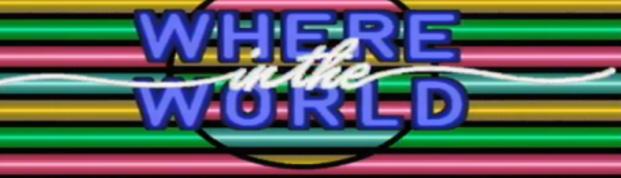
WHERE IN THE WORLD
1987 - 1996
Marty Whelan 1987 – 1989
Theresa Lowe 1989 - 1996
RTE
Four members from two families competed answering mostly geographical questions to win a family holiday. Lendac Computer Graphics Company provided the computer for the show.

KNOW YOUR SPORT
8 October 1987 - 1 April 1998
George Hamilton & Jimmy Magee
RTE
Know you Sport was a quiz programme that sought out the most knowledgeable person about sport. It was hosted by sports commentator George Hamilton and assisted by ‘Mr Memory Man’ fellow sports commentator and encyclopedic sports historian Jimmy Magee
Monday, 11 March 2013
THE HISTORY OF THE IRISH TV QUIZ SHOW - PART 2
What constitutes a quiz show? – Deal or No Deal is a game show as is The National Lottery Games like Winning Streak where luck plays a major role. Quiz shows are where questions and their answers whether general knowledge or specialized decides the winner.
In 2013 the British channels BBC, ITV and Channel 4 broadcast numerous quiz formats especially on their afternoon schedules. RTE do not broadcast any except for quizzes aimed at the youth audience. TV3 broadcast Junior Mastermind, while TG4 broadcasts Ceist GAA. None of these shows offer major cash prizes for successful contestants.

Whats My Line
January 2nd 1970 –
Larry Gogan
RTE
Panelists Brian Murphy, Hal Roach, Patsy Duke and Antonia Wardell ask a series of questions to ascertain the occupation or claim to fame of the guest. The show was a copy of the UK series presented for many years by Dubliner Eamonn Andrews

Letter By Letter
30 September 1971
Larry Gogan
RTE
Gogan presented this programme, which involved three panellists assisting a contestant in guessing a word letter by letter. The first programme was broadcast on 30 September 1971

Quiz Around the Clock
1972
RTE
An Irish geographical quiz.
Coast To Coast
Alan Gibson
1974
RTE
The show involved two competitors in a virtual race around Ireland by means of a studio map. The winner received a cash prize and an Irish holiday. Gibson had previously been a cameraman and floor manager with RTÉ Television.
Omega Point
June 1975 (One Season)
Morgan O’Sullivan
RTE
'Omega Point' was a quiz show for young people with questions based on religion. The first episode was broadcast on 8 June 1975 with presenter Morgan O'Sullivan and adjudicator Father Edward Fitzgerald
To Tell The Truth
1976
RTE

Password
August 1976
Complaints about prize fund of £10 - £20
Top Score
1978
Ian Fox (with Tony O’Riordan & Mary Hogan)
RTE
A transfer of the popular radio quiz show onto television.
Wednesday, 6 March 2013
THE HISTORY OF IRISH TV QUIZ SHOWS - PART 1
THE HISTORY OF IRISH TV QUIZ SHOWS - PART ONE


What constitutes a quiz show? – Deal or No Deal is a game show as is The National Lottery Games like Winning Streak where luck plays a major role. Quiz shows are where questions and their answers whether general knowledge or specialized decides the winner.
In 2013 the British channels BBC, ITV and Channel 4 broadcast numerous quiz formats especially on their afternoon schedules. RTE do not broadcast any except for quizes aimed at the youth audience. TV3 broadcast Junior Mastermind, while TG4 broadcasts Ceist GAA. None of these shows offer major cash prizes for successful contestants.

RTE began its broadcasts in 1962 and in the more than fifty years since Irish TV has broadcast a wide range of quiz shows.
QUIZ SHOW TITLEBROADCAST TIME INFORMATIONPRESENTER/HOSTBROADCASTER
COUNTY QUIZ
7.15 p.m. Tuesday July 10th 1962
Donagh McDonagh
RTE
County Quiz was a general knowledge show that pitted County teams against each other attempting to answer questions on each others counties. A newspaper reviewer reported it as ‘ a tedious 45 minutes’.

JACKPOT
6 January 1962 - 9 June 1965
Gay Byrne / Terry Wogan /Suzanne MacDougalL
RTE
Within days of going on air RTE broadcast its first quiz show 'Jackpot'. The original host was Gay Byrne who was also presenting The Late Late Show. Gay left RTE to try his luck in the UK and was replaced by Terry Wogan. As with all early quiz and game shows the presenter was accompanied by a hostess usually a model. Terry was assisted by Suzanne McDougall.
See also Jackpot 1986

WHAT'S WRONG
1963
Unknown Presenter / Adrienne Ring
RTE
Participants had to find the errors in a number of visual presentations
TAKE MY WORD
Al Byrne (Brother of Gay Byrne)
January 2nd 1964 - 1965
RTE
Take My Word' was essentially a charades-style quiz show featuring personalities from Irish theatre on opposing teams.
QUICKSILVER
1965 - 1981
Bunny Carr
RTE
Quicksilver was the longest running quiz show in RTE history. It was developed by its host Bunny Carr. The show gave rise to the catchphrase ‘stop the lights’. The contestants came from the studio audience as their ticket was picked out of a drum. Blue tickets for the men and pink tickets for the ladies. Contestants would have to answer questions it win cash prizes starting at two pence and rising to five pounds. They could pass on a question and stop the timing lights diming on the game board by stopping the lights. There were thirty lights on the board and the quicker they answered the question that more lights left still on for the next question. If they were playing for 10p and there were 18 lights left on that meant that they had won 18 x 10p, one pound eighty. Often the nerves or panic would set in an they would leave with that amount without going any further. To assist the often shy contestants Norman Medcalfe would sit at the piano and offer musical clues. Sometimes the musical clues were so obscure that even host Bunny Carr did not understand them.


MARK TIME
1966 – 1967
Chris Curran
RTE
An early schools quiz show.
CEIM AR AGHAIDH
Saturday nights 8pm 1967
Liam Devally
RTE

CEIST AGAM ORT
1968 March 1969 7.25pm 30 minutes
Liam Devally / Mary Finan
RTE
Devally was a popular tenor singer during the 1960s and is currently a Circuit Court judge in Dublin. Mary Finan is now a businesswoman in the area of public relations

MATCH PLAY
September 26th 1968 - ?
Malcolm Kellard
BBC NI & RTE
This quiz show featured golf clubs North & South of the border with two club players assisted by a local celebrity.
CROSS COUNTRY QUIZ
Peter Murphy 1969 - 1973
Liam Devally
Jim Sherwin
RTE
'Cross Country Quiz' was a weekly quiz programme, which featured competing Macra na Feirme clubs from around Ireland. Peter Murphy set the questions and presented the programme for the first three-and-a-half years of its run. He was replaced as host by Liam Devally but Peter continued to set and adjudicate on the questions. Towards the end of the series run it was presented by sports commentator Jim Sherwin.

EYE CUE
1969 (One Season)
Brendan Balfe & Mary Casey
Created by John Murphy
'Eye-Cue' was a inter-county television quiz series with an emphasis on visual questions, in 1969.
END OF PART ONE
Subscribe to:
Comments (Atom)